CE-storybooks
Illustrated continuing-education tutorials for clinicians, taught through composite patient vignettes and the Atlas of Tenderness — soft watercolor anatomical plates.
Each volume is an eight-chapter tutorial on a specific clinical presentation. Each chapter opens with a first-person composite patient vignette and unpacks the clinical principles around it in second person to the clinician. Each volume is illustrated with ~50 watercolor anatomical plates and narrated as a full audiobook with chapter markers.
The volumes are designed to be read separately, in any order — and to compound when read as a set. Same narrator. Same illustration style. Same eight-chapter architecture. The closing question of each volume points at the same horizon in a different clinical dialect.
The volumes
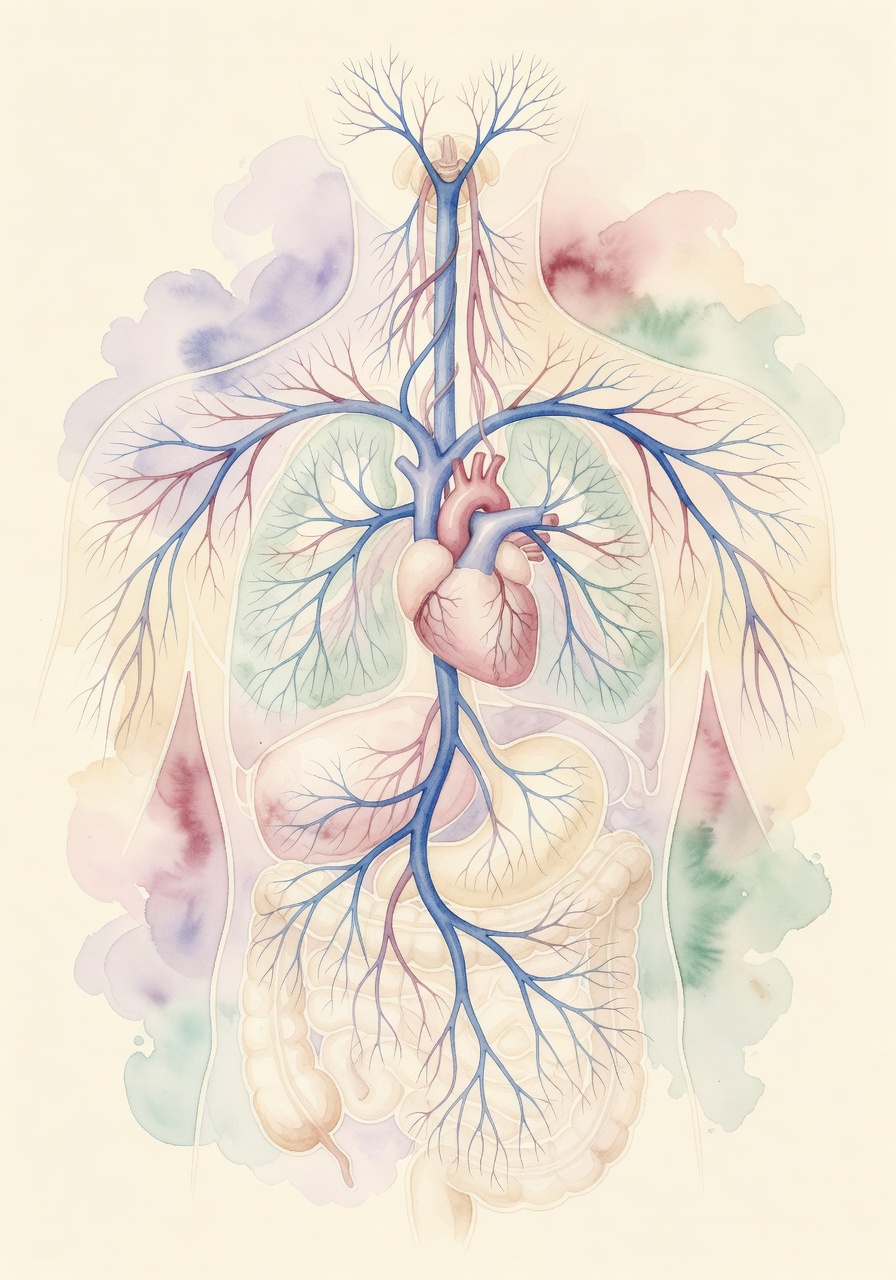
Beyond the Pain
A psychosomatic and narrative approach to dyspareunia
Eight chapters on chronic sexual pain — taught through a biopsychosocial lens, the body's old library of conditioned protection, and the slow work of helping the body rediscover safety, choice, and connection. Maya is the throughline. Jordan opens the couples chapter. Renu opens narrative reconstruction.
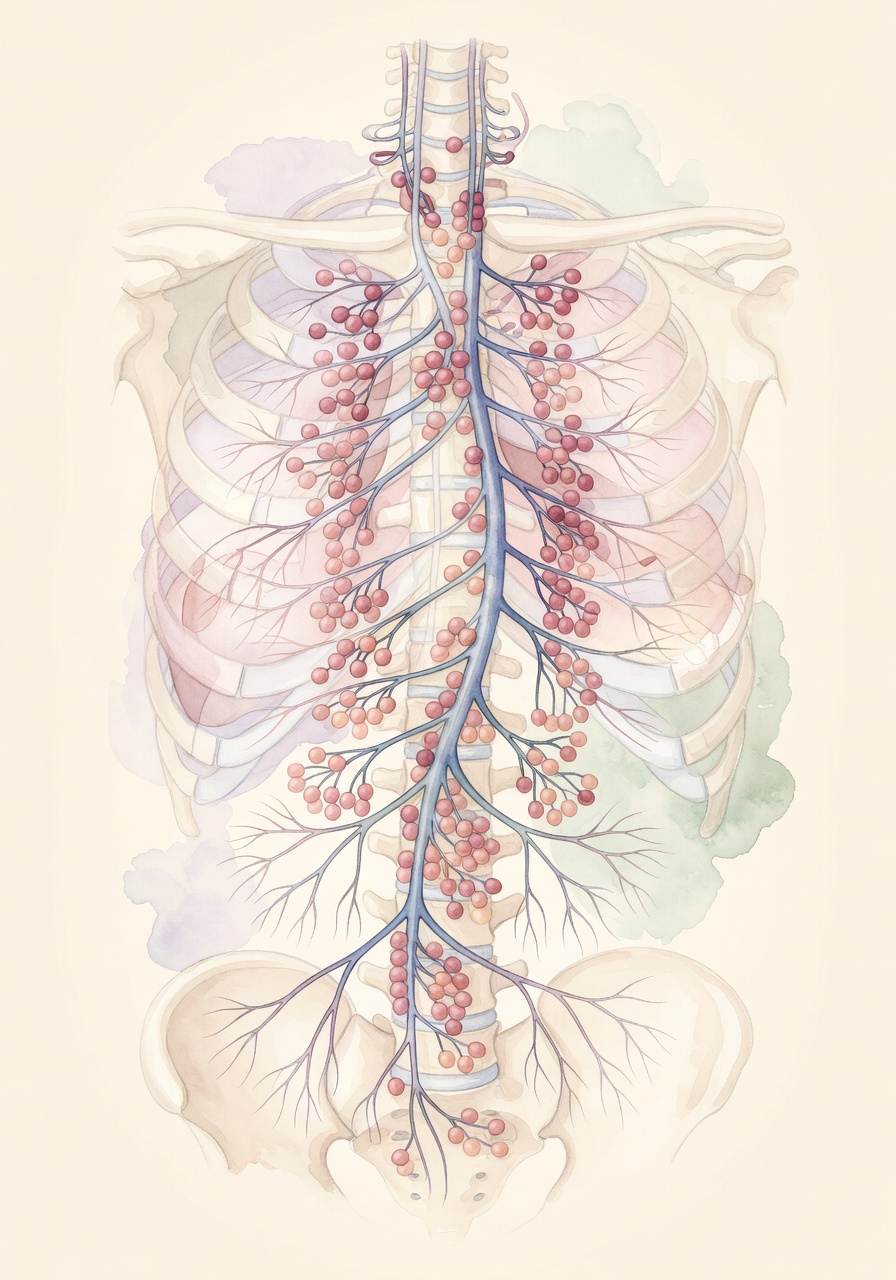
Beyond Performance
A relational and nervous system approach to premature ejaculation
Eight chapters on rapid ejaculation patterns — taught through the autonomic nervous system, conditioning curves, spectatoring, masculinity scripts, and the arousal-ladder retraining work. David is the throughline. Sam opens the couples chapter. Marcus opens narrative reconstruction.
The two covers pair as the autonomic complement: Beyond the Pain's vagus nerve is the parasympathetic regulator — the system of slowdown, safety, and return. Beyond Performance's sympathetic chain is the urgency cascade — the system of escalation, vigilance, fight-or-flight. Stand them side by side and you have the autonomic nervous system as a single anatomical plate, split across two volumes.
About this series
CE-storybooks is an experiment in illustrated, narrated, story-shaped continuing education. Most CE materials are slide decks, journal articles, or recorded lectures. These are picture books for clinicians — same clinical rigor, different vehicle. The form lets the difficult content land differently: the patient vignettes do narrative work that bullet points cannot, the watercolor anatomical plates re-key the medical-atlas register away from clinical detachment, and the audiobook format makes a CE tutorial something you can listen to while walking.
What's in each volume
- Eight chapters — six course modules + an opening frame + a closing reflection.
- Composite patient vignettes — each chapter opens with a first-person voice. No real patient is depicted. The vignettes are constructed; the clinical content does the teaching.
- The Atlas of Tenderness — soft hand-painted watercolor anatomical plates in the tradition of vintage medical atlases, re-imagined with humanity and warmth. ~48 plates per volume.
- A narrated audiobook — multi-voice TTS via ElevenLabs, with ID3 chapter markers and embedded cover artwork. ~65–75 min per volume.
- A single closing question — each volume ends with a question reframing the field's default frame. The questions across the volumes point at the same horizon.
How a new volume joins the series
The build pipeline is in _kit/. See SERIES_GUIDE.md for the full workflow. In short:
- Run
./_kit/new-book.sh <slug>to scaffold the directory + pre-substitute the build scripts. - Edit the brief, characters, voice map, chapter titles in the build scripts, and the cover/portrait prompts.
- Write the eight chapter
chosen.mdfiles (~1200 words each) and six beats per chapter inbeats.json. - Run the seven-step pipeline (render images → segment chapters → render TTS → stitch audiobook → build novel.html).
- Add a card to this
index.htmland commit.
Educational use only. These volumes are clinician-facing continuing-education tutorials. They are not treatment protocols and are not a substitute for individual supervision, training, or peer consultation. All patient vignettes are composite and anonymized.