Beyond Performance


The eight chapters
- Chapter 1 · The Body That Hurries
- Chapter 2 · How the Body Learned to Hurry
- Chapter 3 · The Watcher in the Room
- Chapter 4 · The Arousal Ladder
- Chapter 5 · Tools and the People Who Hold Them
- Chapter 6 · What Sex Was Supposed to Prove
- Chapter 7 · The Two of You, Again
- Chapter 8 · One Moment Inside a Larger Thing
This is a short illustrated continuing-education tutorial for clinicians on premature ejaculation — rapid ejaculation patterns in partnered sexual activity — taught through a biopsychosocial and relational lens. Eight chapters. Each chapter opens with a composite first-person patient vignette and unpacks the clinical principles around it.
The throughline is David, a recurring composite patient. Sam, his partner, opens Chapter 7. Marcus, further along in narrative-reconstruction work, opens Chapter 6. The vignettes are composite and anonymized — no patient is depicted; the clinical principles do the teaching. Companion volume to Beyond the Pain.
The Body That Hurries
The clock on the dresser said eleven-fourteen when we started and eleven-eighteen when it was over. I know because I looked. I always look. She didn't say anything. She doesn't say anything. She rolls onto her back and stares at the ceiling for a second and then she says, "are you okay?" and I want to tell her that's the question I would like to be asking her, and instead I say "I'm sorry," and we lie there in the dark for a long time, and I count the cracks in the ceiling, and at some point I fall asleep angry at myself for falling asleep.
— David, after another encounter
You will see David in your practice. The presentation is consistent enough that once you have seen four or five of him, you will recognize the shape immediately: a partnered man, mid-twenties to mid-fifties, in good general health, whose ejaculation occurs faster than he wants and, often, faster than he can manage. He has tried distraction. He has tried squeezing the base of the penis. He has tried thinking about baseball. He has tried mid-encounter mental arithmetic. He has read internet forums until two in the morning and tried whatever the top comment recommended. None of it has worked for long. By the time he gets to you he has been managing this in private for years, and the private management itself has become part of the problem.

This is the moment, before you have done anything, where you can make a decision that will shape everything that follows. The decision is this: you will not treat his urgency as a flaw in his hardware. You will treat it as a communication from his nervous system that you do not yet understand.
This course is about that communication. It is about learning to read it.
The biopsychosocial frame, plainly
Premature ejaculation is one of the most reliably mis-served presentations in adult clinical practice. It sits at the intersection of three things that medicine is structurally bad at: a symptom whose definition is partly social rather than physiological; sexuality, which most providers were trained to investigate only briefly and then route elsewhere; and the affective texture of a long-term relationship, which most providers were trained not to investigate at all.
The contemporary biopsychosocial frame is not a fancy way of saying "we'll consider the whole person." It is the recognition that ejaculation is a nervous-system event constructed in context, and that the context is always: tissue, history, meaning, relationship, and the moment in the room.
A rapid escalation of sympathetic activation that culminates in ejaculation faster than the patient or his partner wanted is a physiological event. It is also a conditioned response. It is also a relational signal. It is also, almost always, a meaning-laden experience for the patient — a verdict on his masculinity, his desirability, his adequacy. None of those layers cancel out any of the others. They co-exist. The pattern David presents with is not "purely psychological" and it is not "purely physical." Those are not the available options.
The first piece of unlearning the field requires of you is to stop offering David those two options as if they were a real choice.

Ejaculation as a nervous system process
The body escalates toward ejaculation through a cascade of sympathetic activation. Heart rate rises. Breathing shallows. The genital and pelvic vasculature responds. Muscular tension increases. At some point, the system crosses a threshold that has historically been called the "point of inevitability," after which ejaculation is no longer voluntarily preventable. The classical model has framed this as a hydraulic problem: water in the vessel, pressure builds, the valve opens, the water comes out. The hydraulic model is intuitive. It is also, biologically, a cartoon.
The contemporary model treats ejaculation as a learned, predicted, regulable nervous-system output. The same sympathetic system that runs the urgency cascade is the system that has learned — through repetition, anticipation, context, mood, and emotional weight — the speed at which to escalate in a given setting. Slow it down in any one of its inputs (regulation, attention, meaning, breath, present-moment safety) and the cascade slows. Speed it up (urgency, spectatoring, performance pressure, the bedroom-as-test) and the cascade accelerates.
David's cascade has accelerated. His nervous system is doing exactly what nervous systems do: producing a coordinated output calibrated to the inputs it has been trained on. The output is fast. The training is what we work on.
What "fix it" frameworks cost
Notice what happens to David when the fix-it model is applied. He gets handed the squeeze technique. He tries it; it fails about half the time; the failures train him to brace before the squeeze. He gets handed stop-start exercises performed alone, on a schedule, with a stopwatch, until his stopwatch becomes part of his eroticism. He gets handed an SSRI in a six-minute primary-care visit; it works, and his ejaculation latency improves, and his desire for sex with his partner quietly declines, and at his next appointment three months later the urologist will ask only about latency. He gets handed an internet forum's worth of tips, none of them coordinated with his actual nervous system, all of them implicit instructions to try harder.
Each fix, applied serially, generates more of the very vigilance that drives the cascade in the first place. By the time David gets to you he has spent more attention monitoring his own arousal than enjoying it for so long that the monitoring has become its own erotic mode, and the monitoring has come to feel, to him, like the actual problem under the problem.
You can step out of that loop. You step out by refusing to make his timing a referendum on his worth. You step out by saying — early, plainly — I believe what you're describing. I think your nervous system has learned to escalate fast in this context for reasons we can work with. We're going to figure out what it's been doing, and we're going to help it learn to do something different. That sentence, said in the first session, does more clinical work than any of the protocols that preceded you.
What we'll do across this course
Seven more chapters. We'll look at how the body conditions speed (and how it can unlearn it). We'll look at the role of anxiety, spectatoring, masculinity scripts, and the long, quiet inheritance of what sex was supposed to prove. We'll learn — and practice — the grounding, mindfulness, and arousal-pacing tools that let his body be present to the encounter without exiting it into the watcher. We'll talk about behavioral interventions in their useful form, and about working alongside medical providers when SSRI augmentation or other pharmacologic options are on the table. We'll do narrative reconstruction work — what kind of sexual life he wants now, not the one he was told he was supposed to have. And we'll talk about the partner: Sam, who has been holding things together carefully and has not been asked.
The aim is not a treatment protocol. The aim is clinical fluency in a register most of us were never taught.
If you have already read Beyond the Pain, the structure here will be familiar. That is on purpose. The biopsychosocial-relational-nervous-system frame is the same instrument played in a different key. The closing question of Beyond the Pain — what if the goal is not to force the body, but to help it rediscover safety, choice, and connection? — is the same closing question we will arrive at here, reframed for this presentation. I'll give it to you now so you have it from the start: what if ejaculation is not the measure of success, but simply one moment within a much larger experience of intimacy, embodiment, and connection?
Hold that question. Everything else is a way of answering it.
How the Body Learned to Hurry
I keep thinking about how this started. It wasn't always like this. With my first girlfriend, in college, I lasted forever — too long, actually, she used to say it took too long. I remember being kind of proud of it. Then there was a stretch when I was single for a couple of years and I was, you know, alone, and I think I trained myself to be fast — quiet, fast, get it over with before my roommate came home. And now I'm thirty-eight and the fast thing is the thing my body knows how to do. I don't know how to teach it the long thing back.
— David, in his fifth session
What David is describing — the body that learned one rhythm in one context and carried that rhythm into a context that needed a different one — is not a quirk of his psychology. It is exactly how the autonomic nervous system encodes behavior. And once you understand the mechanism, every part of his presentation stops being mysterious.
This chapter is about the biology underneath the biopsychosocial frame. Not so you can lecture the patient about it (please don't), but so that when he says something like the paragraph above, you hear it as a clinically perfect description of conditioned sympathetic escalation, not as confession.
Ejaculation latency is a learned curve
The classical model treats ejaculation latency as a fixed property of an individual nervous system — a kind of physiological setpoint with some variance. The contemporary model treats it as the output of a learned response curve, in which sympathetic activation, expectancy, attentional focus, contextual cues, and emotional weight all feed the slope. Two patients with identical genital sensitivity will have wildly different latencies in clinical contexts because what differs is what their bodies have been trained to do.

The training is associative. The bedroom is paired with arousal — and over hundreds of encounters, the bedroom is also paired with whatever else has been present in those encounters: urgency, watchfulness, the partner's mood, the patient's anxiety about latency itself. The body does not separate these signals. It learns the bundle. By the time David's body enters his bedroom on a Saturday night, it is responding to the bedroom on a Saturday night with Sam after a hard week with the worry about latency in the background, and it is responding with the curve it learned, not a fresh one.
Notice the recursive loop in this: the patient's worry about latency becomes part of the context that the latency curve was trained on. The worry, encoded as part of the bundle, becomes a cue that calls up the rapid curve. This is why purely cognitive reassurance fails. You cannot talk a conditioned response out of being conditioned.
Lifelong vs acquired PE — useful, partly
The clinical distinction between lifelong (latency has been short since first partnered sexual experience) and acquired (latency was once longer and has shortened) is useful, but it is also less binary than the literature suggests. Most patients have a mixed picture: a body that learned its first curve early, was reshaped by a long stretch of solo encounters, was further reshaped by relational dynamics, and is now presenting with a curve that is, in fact, the integral of all of them.
The clinical takeaway is not to file the patient into one category and move on. It is to ask, with him: what curves has your body learned, in which contexts, and what is it tracking when it speeds up now? The answers are usable. Hypothetical example, drawn from how patient histories tend to look: a man who masturbated quickly through adolescence to avoid being caught, then partnered young with someone whose pleasure required a long latency he had to consciously construct, then divorced and re-partnered into a relationship in which the new partner read the longer latency as effort and the shorter as enthusiasm, then began monitoring his own arousal once worry crept in. The current curve is the cumulative trace of all of that, not a single mechanism.
Situational vs generalized
The distinction situational (rapid only in some contexts) versus generalized (rapid in nearly all) is clinically gold because it tells you exactly what the curve is tracking. A patient who is rapid with his current partner but not with other partners is not telling you about his physiology — he is telling you about something his body has learned specifically in this relationship. A patient who is rapid in partnered sex but not in solo masturbation is telling you about the presence of the other person, or what the other person represents, as the conditioning variable.
Treat these reports as data, not as confessions. The patient who is rapid only with his wife is not telling you he loves her less than the woman from the conference; he is telling you something specific about his nervous system in his wife's presence, which is workable.
Spectatoring as a conditioning amplifier
We will spend most of the next chapter on spectatoring — the act of stepping out of one's experience to monitor it — because it deserves its own chapter. But the conditioning piece is already visible in what David said in his vignette. The body that learned a fast curve also learned to watch itself running the fast curve, because watching was the available management strategy. The watching is now part of the encoded behavior. Every encounter is, for him, a re-instantiation of the fast curve and the watcher and the inner script that runs alongside both. The whole bundle fires together.
This is why the most effective interventions in this presentation are not the ones that target ejaculation latency directly. They are the ones that change the bundle — by changing the patient's attentional pattern during arousal, by changing the meaning of the encounter, by changing the partner's response, and by giving the patient's nervous system new uneventful experiences of arousal-without-urgency that update the conditioning slowly.

Two clinical implications, directly from the science
First — you treat the curve, not the moment. Most of your therapeutic action happens outside the bedroom. The conversation about Sam's hard week, the patient's breath in your office, the words he uses to describe his own arousal, the times he is rapid in non-sexual contexts that you and he have started to notice (yes, he is — watch how he eats, watch how he gets out of a chair, watch how he ends his sentences). The conditioning lives there. It is being updated whether you target it or not.
Second — stop validating the curve as identity. Sympathy that says "of course you're rapid, you've had so much pressure, it makes sense" is well-intentioned and clinically counterproductive if it is the only thing you say. Validation without re-prediction tells his body it is right to stay on the fast curve. The compound move you want is: Of course your body learned this. It learned exactly what its inputs taught it. And — together — we are going to give it different inputs to learn from. The "and" is doing all the work.

You are now, very gently, in the curve-retraining business. The training is old. It is not closed.
The Watcher in the Room
There's this other version of me that shows up the second things start. He's a few feet away, watching. He's keeping score. He's running a kind of mental commentary track — "okay, you're at maybe a six, careful, careful, slow down" — and I can't get him to stop and I can't get back into my actual body and at some point the math gets ahead of me and it's already happened. It's like I'm trying to drive a car from outside the car. Through the windshield. Backwards.
— David, on the spectator
This chapter is about the watcher — what Masters and Johnson called spectatoring more than fifty years ago, and what most clinicians still under-recognize as the core mechanism in this presentation. It is also about shame, masculinity, and the cultural scripts that built the watcher in the first place.

If your patient says any version of David's vignette, you have a spectatoring presentation. Most PE presentations are spectatoring presentations, even when the patient does not yet have language for it. The clinical move is to name the watcher, externalize it, and slowly reduce its presence in the encounter.
What spectatoring is, neurologically
Spectatoring is a redeployment of attention from the body's first-person experience to a third-person observational stance — the cortex monitoring the body the way a coach monitors an athlete. Functionally it removes the patient from interoceptive contact with his own arousal. He is no longer feeling the warmth in his pelvis, the shift in his breath, the change in his partner's pace; he is evaluating a representation of those things from a constructed distance.
The neurological cost is twofold. First, the patient loses access to the interoceptive signals that would let him regulate arousal. He cannot slow down the curve because he cannot feel the curve; he can only feel his estimate of the curve, which lags. Second, the constructed distance is itself a sympathetic activator. The watcher is anxious. The watcher's worry adds load to the very system whose escalation the watcher is trying to monitor. The watching produces the urgency it was deployed to manage.

This is the loop, in one sentence: the watcher, deployed to slow the body down, is the engine of the body's hurry.
How the watcher got hired
Patients do not deploy the spectator out of nowhere. The spectator was hired because, at some point, the patient discovered that he could not trust his body to handle the encounter on its own. The discovery was usually painful. A first partnered encounter that ended faster than he wanted, and the small wince on his partner's face he did not stop seeing. A conversation about expectations he did not know how to have. A moment in a long-term relationship when his partner's request — can you make this last? — was kind and patient and registered as a verdict.
Once the spectator is hired, he does not retire. He is the patient's response to the perceived stakes. The longer he stays, the more elaborate his commentary becomes. The commentary is not pathological in origin; it is the management strategy of a person who is trying to be a good partner and does not know what else to do.
You will not get rid of the spectator by arguing with him. You will get rid of him by changing the conditions that hired him.
Masculinity, adequacy, the inheritance
The watcher's commentary track is, almost always, in the voice of a cultural script the patient did not author. The script comes from older brothers, locker rooms, pornography, romance novels his partner left lying around, the films he watched as a teenager, the friends who made jokes, the magazines whose covers asked questions like how long should it last? The script is variable but its core proposition is constant: the man's job in sex is to last, and his worth is measurable by how long he lasted.

This script does not survive five minutes of clinical scrutiny. It is incoherent on its face — duration is, at best, a small and contingent input into mutual satisfaction. But the script does not need to survive scrutiny. It only needs to operate sub-clinically. And it does. Most male patients have absorbed this script before they had sexual experiences of their own, and the script then interprets their sexual experiences for them: rapid encounter = failure of the central masculine task = verdict on worth.
You can name this in session. I want to put a sentence in the room. The sentence is: a man's worth is measured by how long he lasts. You did not invent that sentence. It is somewhere in your head anyway. Can we look at it as a sentence, separate from you, and ask whether it deserves the authority it has? Patients often pause for a long time. The pause is significant. It is the first time the sentence has been treated as a sentence, rather than a fact.

Shame, briefly and accurately
A note on shame, because this chapter is incomplete without it. PE patients carry shame at a depth that most clinicians do not initially register. The shame is not about the encounter that just happened. It is about the cumulative weight of being this person — the partner who cannot give his partner what she wants, the man who is, by his own metric, failing the central task. The shame is private, mostly silent, and frequently the reason it took him years to find your office.
Shame does not respond to reassurance. The phrase you have nothing to be ashamed of is heard, by a shame-saturated nervous system, as you are wrong to feel what you feel — which deepens the shame. The move that does work is the move that ends the privacy of the shame: the clinician naming, in plain language, the very thing the patient has been silent about. Not as content discussion, but as relational fact. Many men with this presentation describe a shame they have never said out loud to anyone, including their partner. Has that been part of your experience? The question itself does the work. The shame begins to lift the moment it is in the room with a witness.
Working with avoidance
A subset of patients have responded to spectatoring and shame by avoiding sex entirely. The avoidance is rarely framed as such — they are busy, they are tired, they have not really been in the mood — but the pattern is unmistakable to a partner who has been counting weeks. The avoidance is a defensible move. It is also corrosive to the relationship and to the patient's own sexual identity.
Treat the avoidance with respect. It is the patient's nervous system protecting him from the prospect of another encounter with the watcher. Do not push him back into the bedroom on a schedule. Do work on the watcher first. When the watcher is quieter, the avoidance often lifts on its own, because the bedroom is no longer the room where he expects to fail.
What you can offer, this chapter
Three concrete clinical moves. Memorize them.
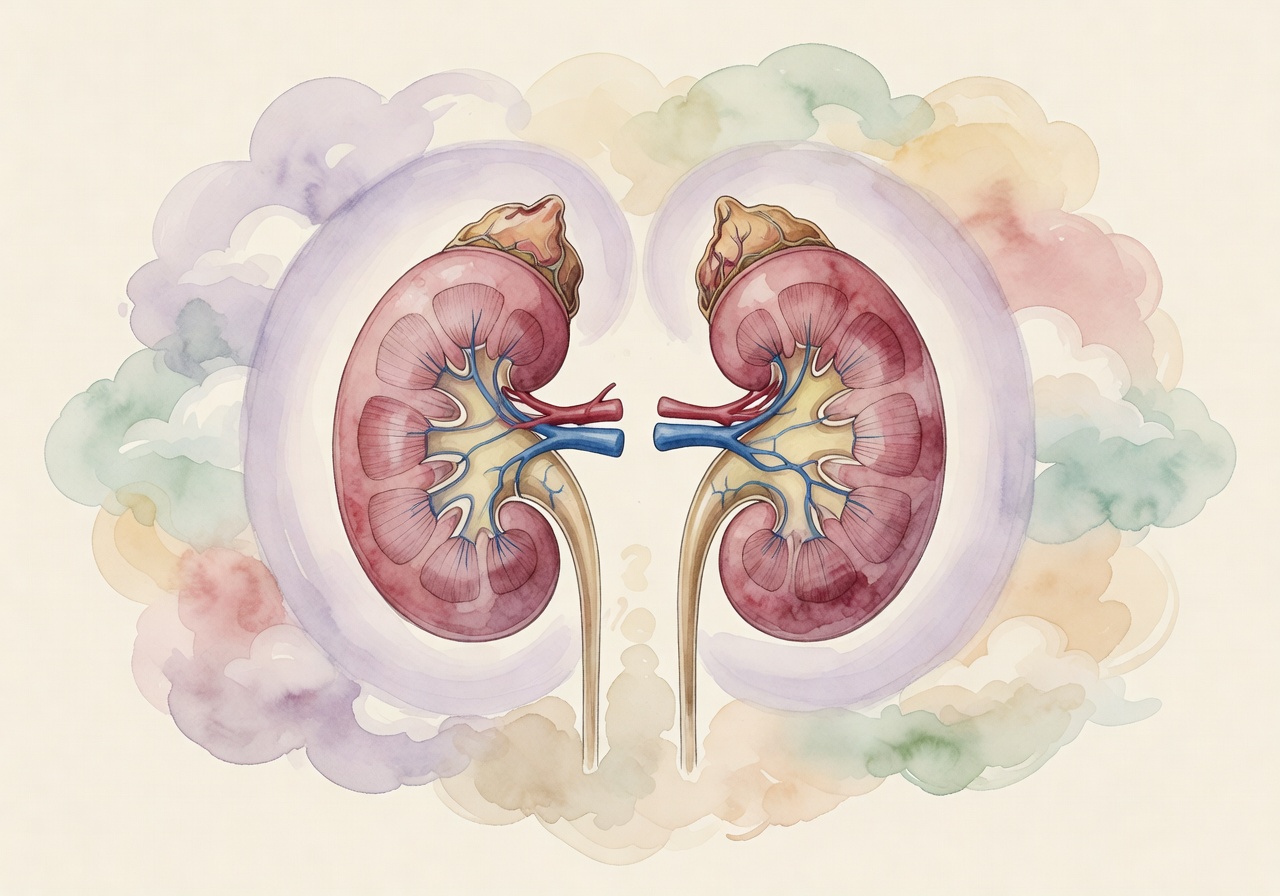
1. Name the spectator. Give him a face. Some clinicians and patients name him as a separate character — the watcher, the coach, the one with the clipboard. The naming externalizes the function and makes him available for negotiation. The patient is now in a relationship with the watcher, not identical to him.
2. Re-route attention to interoception. Slowly, in non-sexual settings first, train the patient to notice felt sense in his body — the temperature of his hands, the weight on his feet, the breath in his ribcage. This is mindfulness without the meditation-app baggage. You are restoring the channel the spectator has been overriding. We will go deep on this in the next chapter.
3. Surface the masculinity script and let it be inspected. Not argued with — inspected. The patient can decide, with adult perspective, which clauses he wants to keep and which he wants to retire. The decision belongs to him. Your job is only to make the inspection possible.

The watcher is not the patient's enemy. The watcher was, once, the patient's best attempt at care. Treat him with the dignity of an old protector who is being told, gently, that his shift is ending.
The Arousal Ladder
She had me sit on the couch with my eyes open and just notice where my breath was. I said it was in my chest. She said okay, that's the report, no change needed. Then a couple of minutes later she asked again. It was lower. I hadn't done anything. We didn't talk about sex once that whole session. By the end my hands were warmer and my shoulders had come down and I was a little embarrassed at how much that was a thing. And I realized I had not, in any context I could remember, felt my hands get warmer because someone was paying attention to me.
— David, after a grounding session
This is the most practical chapter in the course. You are going to learn — and rehearse, in your own body, before you offer it to a patient — a small set of arousal-regulation and mindfulness moves that are the working tools of this presentation. They are simple. They are not easy. The patient cannot do them if you cannot.

The arousal ladder, plainly
Imagine arousal as a ten-rung ladder. Rung zero is fully unaroused, neutral, at rest. Rung ten is the point of ejaculatory inevitability — past which the nervous system is committed to the cascade. Rungs one through nine are the differentiated felt sense of escalating sympathetic activation: the warmth begins, the breath shifts, the genital response intensifies, the urgency builds. Most patients can name rung zero and rung ten. The middle rungs are where the work is.
The clinical project, in one sentence: teach the patient to feel the difference between rung six and rung seven from the inside, in real time, so that he can spend time on rung six instead of escalating to rung eight before he noticed.
Most patients, when they first try this, cannot distinguish the middle rungs at all. They have spent so long monitoring an external estimate that the interior signal has gone quiet. The signal is not absent — it never was. It has just been overridden by the watcher's commentary. We are restoring the channel.
Mindfulness without the baggage
Mindfulness in sex therapy has the same problem mindfulness has everywhere: the word is loaded. It carries meditation-app associations, eastern-spirituality connotations, and a vague implication that the patient should feel calmer or more enlightened, which is a setup for a new layer of performance. Skip the framing. Use the practice without the package.
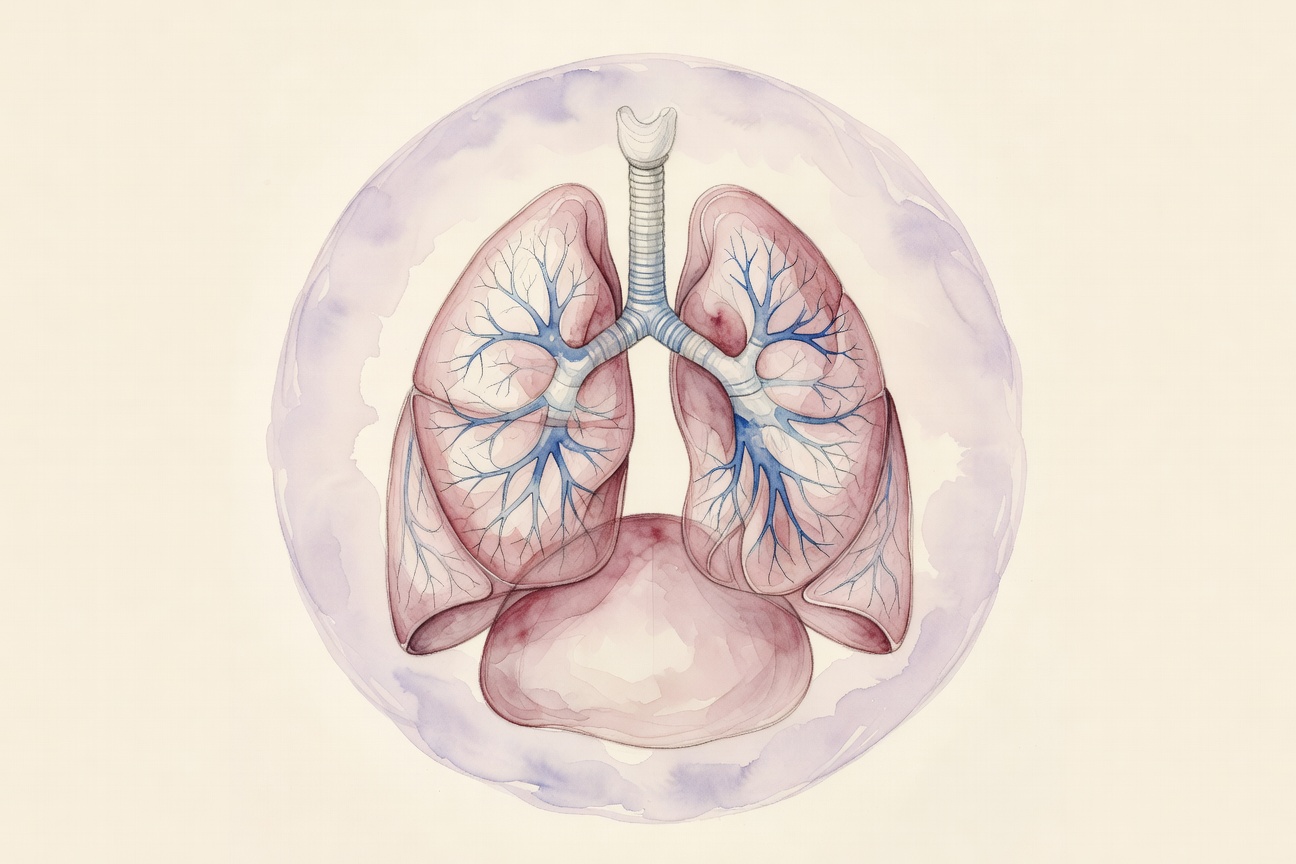
What you are actually doing is interoceptive training — restoring the patient's capacity to notice felt sense in his own body, without intervening on it. Where is your breath right now? What temperature are your hands? Where is the weight in your seat? These are not therapy questions. They are training reps for a sensory channel that has been chronically suppressed.
Do five minutes of this at the start of every session, before the topic of sex comes up. Five minutes of interoceptive noticing in a clinical office, week after week, will do more for arousal regulation than any technique you teach. The channel is what you are building. The technique is a use of the channel.
Breath, used correctly
A note on breathwork. Most patients have been told to "take a deep breath" by enough providers that the instruction has become an irritant. Skip deep. The lever you actually want is extended exhale, the only consciously-accessible parasympathetic input.
In session: have the patient exhale a beat longer than he normally would, with a slightly open mouth, and let the inhale come on its own. Three of those. Notice the shift in his face. Do not narrate the shift. Let him notice it himself. The noticing is the trained capacity. The breath was the lever.
For home practice, teach a tiny three-breath set he can use anywhere — not as a sex-prep ritual, but as a daily practice in non-sexual contexts. Standing in line. At a stoplight. Before opening his laptop in the morning. The point is to make the lever available without it being tied to performance.
The arousal-walk
This is the central skills exercise of this chapter. You are going to teach the patient to walk up the arousal ladder, in interoceptive contact with each rung, in non-sexual settings first, then later in solo settings, then much later in partnered settings.

In session: have the patient sit with his hands resting on his knees, eyes closed if comfortable. Ask him to name his current rung. He will guess. Honor the guess. Then ask him to bring himself up one rung using imagery, memory, or attention — not all the way, just one. Wait. Ask him where he is now. The number is less important than that he is reporting from inside.
Then ask him to let himself settle one rung down. Not through technique. Through the simple act of letting the elevated state subside. Wait. Ask where he is. He may report that he is in the same place, or higher, or lower, or that he cannot tell. Any answer is data.
This exercise, practiced over weeks, teaches three things at once: (1) the rungs are distinguishable; (2) ascent and descent are both available; (3) his body responds to attention itself as a regulator. He is the regulator. He has been outsourcing the regulation to the watcher; the watcher was bad at it; the system was built to do this from the inside.

For home practice he does the same exercise solo, in non-sexual settings, then in solo masturbation contexts with the explicit instruction that the goal is not orgasm. The goal is to walk up the ladder, sit on a rung, walk back down a rung, sit there. He may or may not finish. The finishing is irrelevant. The walking is the training.
Stop-start, re-framed
The classical stop-start technique — masturbate to near-ejaculation, stop, wait for the urgency to subside, resume, repeat — is one of the oldest behavioral interventions in this field and is generally treated as a mechanical skill. It is not, in fact, mechanical. It is the arousal-walk applied at a higher rung. Once the patient has built the interoceptive capacity in lower rungs, stop-start becomes the natural extension upward.
Two clinical adjustments. First, strip the stopwatch. The classical protocol's timing is an artifact of a behavioral framework that no longer fits. Time is a distraction. Felt rung is the variable. Second, don't introduce stop-start until the patient can already detect his middle rungs reliably in non-stop-start contexts. Patients who try stop-start before the interoceptive channel is restored learn only to dissociate harder at the stop point. The stop has to be a choice from inside, not an externally-instructed pause.
Co-regulation, in the office
Your nervous system is doing half this work. The patient with a hyperactive watcher is exquisitely attuned to your regulation. If you are running late, hungry, mentally writing your next note while he speaks, his watcher will be running its commentary at full volume. If you are settled, your breath low in your belly, the silences in your speech a little longer than feels comfortable, his watcher will quiet down without you intervening. The work has begun.
This is not subtle and it is not optional. The largest single intervention you offer in a session is the regulation you bring into the room. Be the steadier nervous system he can borrow from for the hour he is with you. That borrowing, repeated weekly, is part of how his nervous system learns it has options.
What the patient takes home
A small set, deliberately small. Pick two, with him:

1. The three-breath set, daily, non-sexually. Extended exhale, anywhere, anytime, as a daily practice unbundled from arousal. The lever stays available. 2. The arousal-walk, solo, non-goal-oriented. He works the middle rungs. He sits with the felt sense. He does not need to finish.
Notice what is missing from his homework. Anything aimed at increasing latency. Anything that puts a body part on a schedule. Anything that requires Sam's participation. The home practice is only about the channel. The channel does the rest.
Language to retire
Two phrases out of your vocabulary in this work:
- Last longer — places the patient inside the very script we are dismantling. Replace with find the middle rungs, stay present, notice where he is. - Control — implies the body is a thing to be subdued. The body is not the adversary. Replace with regulate, pace, attend.

These are not euphemisms. They are clinical instruments. The words the patient inherits from you become the frame he uses about his own experience for the next decade.
Tools and the People Who Hold Them
My GP wanted to put me on an SSRI right away. He had a script printed before I finished the sentence. I went home with it in my pocket and didn't fill it. I came in here that week and asked you what you thought, and you said the medication might be useful, and you also said we had not yet done the work that would let me know whether I needed it. I appreciated that. The first time anyone treated this like a decision and not a recipe.
— David, on the medication question
This chapter is about the tools in this presentation — behavioral interventions, sensate focus adaptations, medication, condoms, the small stack of practical aids — and about the relational fact that determines whether any of those tools work: who is holding them, and from inside which frame.

The pitfall in this entire territory is mechanism without context. A patient handed the right tool inside the wrong frame is being trained, by the toolset itself, to feel like a malfunctioning device. Your job is to hold the toolset inside a frame in which the patient remains a person.
Behavioral interventions, used well
Behavioral interventions in PE have a long pedigree — the Masters and Johnson sensate focus protocol, Semans' stop-start, the squeeze technique, the dilator-of-the-corresponding-presentation. They have an empirical track record. They are also routinely mis-deployed. The mis-deployment is rarely about the technique itself; it is about the frame the technique is offered inside.
Three corrections to the standard application:
1. The technique is in service of interoception, not latency. Stop-start is not a stopwatch exercise. It is the arousal-walk applied at the upper rungs (see chapter four). The marker of success is not seconds-of-pre-ejaculatory-control; it is the patient noticing the rung from inside and choosing.

2. The technique enters when the patient can use it. Most behavioral interventions are introduced too early — in the first or second session, before the interoceptive channel has been rebuilt. Premature deployment teaches the patient that he cannot use the tool, which becomes one more piece of evidence in his failure file. Wait until he can. He will be able to.
3. The technique is removable when it is no longer needed. A patient who is still doing stop-start six years later has not graduated. The tool was a scaffold. It comes down.
Sensate focus, adapted for this presentation
Sensate focus — Masters and Johnson's original couples protocol of structured non-genital touch sessions in which one partner touches the other for the toucher's curiosity, not the receiver's pleasure — translates well into PE work, but it needs adaptation. The classical protocol forbids genital contact at stage one and slowly reintroduces it. In a PE presentation, the more useful adaptation is to forbid intercourse for a defined period while permitting genital touch in the toucher-focused frame. This decouples genital arousal from the performance context that has been driving the curve.
Stage one in this adaptation: structured non-genital touch sessions, twenty minutes, the toucher attending to texture and warmth, the receiver attending to felt sense. No goal. No arousal target. Stages two and three open genital touch and eventually intercourse back up incrementally, but only when the patient's interoceptive channel is functioning in low-stakes contexts.
You can be specific with the couple: for the next four weeks, no intercourse, in either direction. The pressure that comes off you both will be considerable. Use the freed space for the touch sessions we are about to design. The patient with a hyperactive watcher exhales when intercourse is taken off the table by clinical decision. The watcher's job is suspended. The body can rest.
Practical aids — without the shame
The internet has produced an entire small economy of practical aids — desensitizing condoms, topical lidocaine sprays, delay creams, vibrating cock rings, glans-numbing gels. These are often dismissed by therapeutic clinicians as gimmicks and over-prescribed by mechanically-minded providers as front-line fixes. Both stances miss the point.
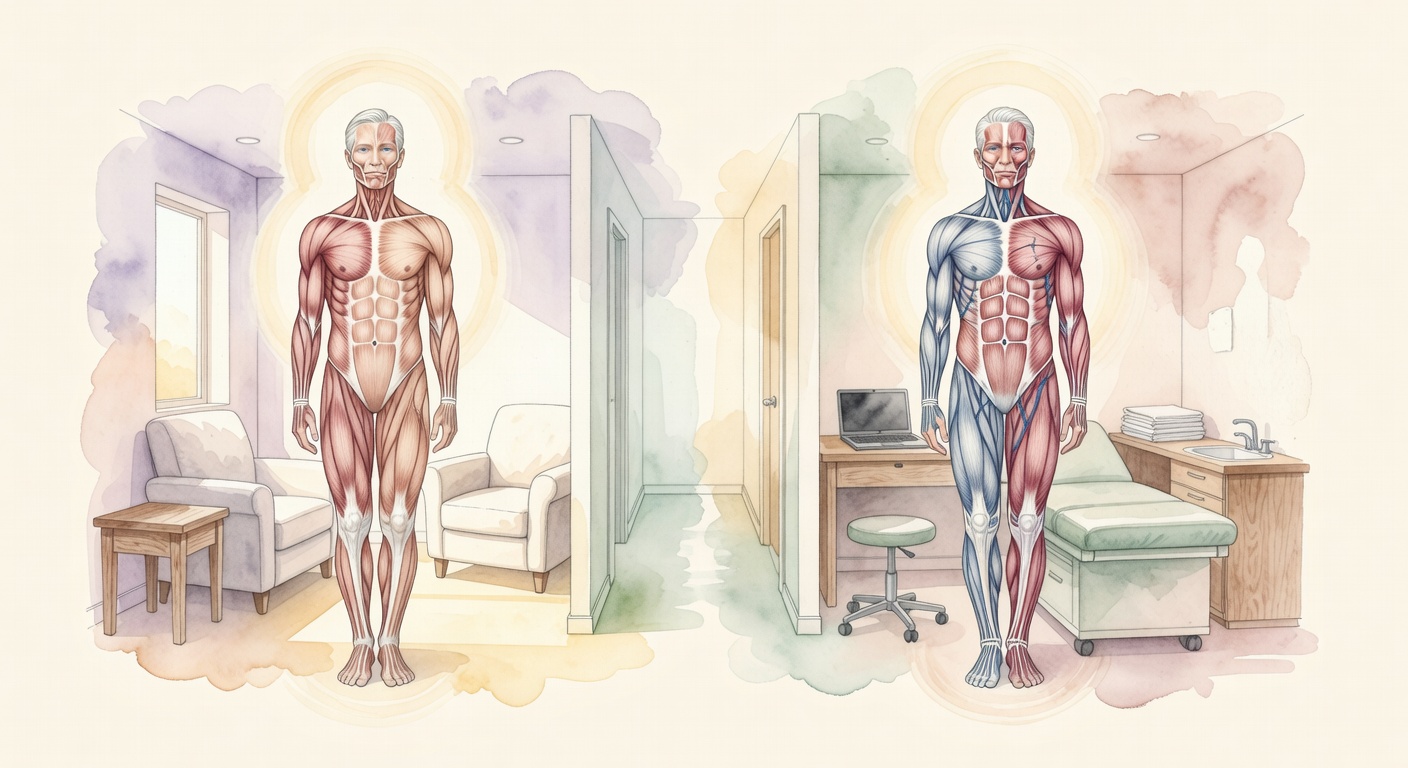
A patient who has had one or two encounters with significantly longer latency than usual — for any reason, including a desensitizing condom — has, in his body, a new data point that the long curve is available to him. The data point matters even if the cause was external. The conditioning starts to update. Aids are not the treatment, but they can be an entry-ramp into encounters that update the prediction.
Two clinical guardrails. First, never offer the aid in a frame that implies it is the answer; offer it as a temporary input into the longer training. Second, watch for the aid becoming the patient's only path to encounter — at which point you have replaced one performance script with another. The aid is a scaffold. It also comes down.
Medication, considered carefully
SSRIs (paroxetine, sertraline, dapoxetine where available) have a robust empirical record for increasing ejaculation latency. They are also routinely prescribed in primary care without integrated counseling, and the most common outcome is a patient who gains seconds of latency, loses meaningful proportions of his libido, and presents at his next visit reporting both — at which point the prescriber typically dose-adjusts the SSRI without acknowledging the libido cost.

Your role here is not to gatekeep the medication. It is to help the patient hold both the option and the trade-off. The relevant clinical conversation has three parts:
1. The pharmacology, briefly and honestly. SSRIs increase latency through serotonergic effects on the ejaculatory pathway. They also affect mood, libido, and sometimes the affective texture of arousal itself. The mechanism is not selective.
2. The trade-off, in concrete terms. If we add the medication now, your latency will likely improve. Your desire for sex with Sam may decrease. Your sense of sharpness in arousal may flatten. The medication does not distinguish between the urgency we want to slow down and the desire we don't.
3. The sequence. We can also do six more months of the regulation work first, then re-evaluate. If the regulation work moves the needle, we may not need the medication. If it doesn't, we have a clearer indication, and you'll bring the medication into a system that is more capable of using it. Most patients, given that sequence frame, choose to defer. Some do not, and that is a clinically valid choice, made consciously.
Coordinate with the prescribing provider. With the patient's permission, share notes once or twice. The patient who feels that his therapist and his physician are on the same team — not split-care, not parallel-care — is the patient who can hold the medication as one input among several.
When to refer to a urologist (and how to frame it)
A subset of patients with rapid ejaculation have contributing physiological factors that benefit from urological assessment — undiagnosed prostatitis, congenital hypersensitivity, hypothyroidism, undertreated hyperthyroidism, certain neurological conditions. The yield from urology referral, in the typical PE presentation without other physical symptoms, is low but not zero. Refer when the history suggests it.

The framing matters. I want us to rule out the small subset of contributors that are physiological and addressable medically. It's not because I think your presentation is purely physical; it isn't. It's because we want the work we do here to be on the actual variables. Many patients have been referred to therapy from a urologist; the reverse referral, made well, often produces a more useful urology visit than the patient would have had cold.
The five-word sentence
You can teach the patient the same five-word sentence we taught the patient in Beyond the Pain, slightly adapted:
> I need to slow down.
He gets to use it. In session. In the bedroom. To his physician. To you. The provider will pause. The provider will not be angry. The provider will not be disappointed. The body that has spent thirty years on the fast curve gets a different message: that his I need to slow down is the senior signal in the room. Practice it in session. The first time he uses it in the bedroom with Sam, things change.

This is the patient who collaborates in his own care. That is the patient any of these tools can actually help.
What Sex Was Supposed to Prove
By the time I got to my forties I had not had what you would call enjoyable sex in fifteen years. Plenty of sex. Just not the kind where I was actually in the room. I was always running the meter, scoring myself, comparing the encounter to what I had read it was supposed to be. Then my second marriage fell apart, partly over this, and I went to therapy, and the first thing my therapist asked me was — what did you decide sex was supposed to prove. And I cried for like twenty minutes because no one had ever asked me that.
— Marcus, on a Wednesday afternoon
By the time you are sitting with Marcus, the early work is largely done. The watcher has been mostly retired. The interoceptive channel is functioning. There is some uneventful intimacy in his current life that his body has filed as okay. And now a new problem appears, which the previous chapters did not prepare him — or you — for: he does not yet know who he is sexually, because the only sexual identity he's had for years was the failure script.

This chapter is about the slow, careful work of helping a patient re-author his sexual narrative. It is the move from clinical recovery to erotic agency. It is also the chapter where you become less useful to him, which is, paradoxically, when you are doing the most useful work.
The failure script for men
Every male patient who has had a chronic PE presentation has, by the time you meet him, written and rewritten the same story about his sexuality. You will recognize the story:
- The body is the obstacle. - The relationship is fragile in this dimension. - Sex is a measurable performance, and the measurement is duration. - Pleasure is what other men get to feel. - The most realistic future is one in which sex is endured rather than enjoyed. - His worth as a man is at stake every encounter.
This is the failure-based sexual script in its male variant. It is not a thought. It is a structure. It shapes which futures he can imagine, which fantasies he allows himself, which conversations he can have with his partner, and which questions he can hear from you. The script is the operating system, and most of his early sessions have run on it without either of you naming it as the script.

You can name it now. I want to point at something — there is a story you have been carrying about what sex is supposed to be and what it is supposed to prove about you. I think it has shaped almost every conversation we have had. Can we look at that story, as a story, and decide together whether it's the one you want to keep telling?
He will pause. Possibly for a long time. The pause is the work beginning.
Externalizing the script
Narrative therapy's central move — externalize the problem — is your central move here. The script is not him. The script is a thing he inherited, built, was given. It came from older brothers. From locker rooms. From films he watched as a teenager. From the friends who made jokes. From the first partner who wanted him to last longer and the second partner who didn't. From magazines whose covers asked questions like how long should it last?
Give the script a name. The Stopwatch. The Ledger. The Adequacy Test. Once it has a name it is no longer him — it is something he can hold at arm's length and inspect. Patients often laugh, a little, when they name it. The laugh is significant. It is the first time in years he has been bigger than the story.
Three narrative interventions
Three concrete moves, each carrying weight, in roughly this order:
1. Sexual timeline mapping
A literal timeline, drawn on paper, with him. Earliest memory of his own body as a sexual body. Earliest message about what kind of body it was. First curiosity. First touch he initiated for himself. First partnered encounter. First encounter he experienced as too-fast. First time he watched himself during sex. First time he avoided sex to avoid the watching. First time he told someone — anyone — what was happening. First time he didn't.
The timeline is not a confession. It is a map. The patient who sees his own history laid out on paper sees, often for the first time, that the rapid curve has a story. The story has chapters. Some chapters were inherited. Some chapters were authored by other people. Some chapters he has the right to revise.
2. The pleasure inventory
Not "what turns you on." That question, asked of a patient still inside the failure script, returns the wrong answer because it routes through performance. Ask instead, with patience: what kinds of physical experience, anywhere in your body, in any context, do you find pleasurable?

Cold sheets in summer. The first sip of coffee. A long hot shower. His hand on his own chest after a hard run. His partner's hand on the back of his neck. A song he loves. The weight of a heavy blanket. Sunlight through a window. Stretching after sitting all day.
The inventory does two things at once. It widens his definition of pleasure beyond the genitally-defined version he has been operating on, and it gives him a body of evidence that his capacity for pleasure has been operating, undamaged, the whole time he thought he was a failure. Most patients, looking at the completed list, are quiet for a long time. Many cry without quite expecting to.
3. Re-authoring the future scene
The narrative-therapy "preferred future" move, adapted for the erotic register. Ask: if you could write a single small scene of intimacy six months from now — not the grand finale, just one ordinary scene — what is happening in it? What are you doing? What is your partner doing? What does the room feel like? What is your body feeling? What is your body NOT having to do?
That last clause carries unexpected weight. The future scene most often gets written by what it does not contain — no watcher, no stopwatch, no inventory of his performance the moment it ends, no scanning his partner's face for the post-encounter verdict. The clinical use of the scene is not as a goal. It is as a horizon. He has a small scene he has imagined as a possibility. The possibility itself widens the channel.
"What has your body been trying to do for you?"
There is a single therapeutic question you will use, repeatedly, in this chapter of the work, and it is worth memorizing in the exact phrasing:

> What has your body been trying to do for you?
The grammar is the intervention. Not what's wrong with your body. Not what's the dysfunction. Not why are you so fast. Subject: your body. Verb: trying to do. The patient is positioned as the served party. The body is positioned as the server. The current speed is positioned as ongoing and intentional, even if its current form is no longer needed.
You will get answers across months. The first answers will be partial. Get me out of the situation before I disappoint her. Get me to the finish so I can stop watching myself. End the encounter before the shame starts. Be efficient. Stay quiet. Not be noticed. Each answer is a chapter title in the new narrative. His body is not failing him. It is, faithfully, executing a job description he absorbed thirty years ago and never updated.
That single reframing — the body as faithful servant of an outdated job description — is the engine that drives the rest of the recovery. Everything from here is the patient learning, in conversation with his own body, what he wants to ask it to do now, given that he is a different person than the one who wrote the original job description.

The clinician's quiet exit
Late in this phase you will notice that the patient is bringing in more of his own material and asking for less of your scaffolding. The sessions get a little lighter. He makes jokes about the watcher — naming him sometimes with mock fondness, the way one talks about an old roommate. He tells you about a small intimate moment he did not have to debrief — he just had it. This is the work succeeding. Resist the urge to fill the lightness with new agenda. Resist the urge to be necessary. The patient becoming his own narrator is not your displacement. It is your purpose.
The Two of You, Again
I love him. I want to say that first. Because most of the time I am in this conversation I am told I should be patient, I should be supportive, I should not make him feel pressured. And I have been all of those things, for years. I have also been quietly devastated for years. I have been the person managing his shame about a thing I am the audience for. I have stopped initiating because every time I do he reads it as a deadline. I have stopped not initiating because that, too, gets read. There is no move I can make that is not a comment on him. I would like, for an hour, to be a person and not a referendum.
— Sam, in her first individual session
You may not see Sam for a year. The partner in a PE presentation is the most consistently under-served person in this clinical picture. She has been carefully not asking for anything, because asking has come to feel like pressure, and pressure has come to feel like the very thing that produces the speed. She has been managing her own frustration, her own erotic disappointment, her own private wondering about whether she is somehow the cause, and her own quiet exhaustion at being permanently in the position of audience.

When she finally gets to your office — usually because the primary patient brings her in, or because his recovery has reached the stage where she can afford to fall apart — you have one chance to make her welcome. The chance is in the first five minutes.
This chapter is about working with the couple as the unit of care, and about working with the partner as a patient in her own right.
What couples work in this presentation actually is
Most couples therapy increases the relational bandwidth between two people. Couples work in PE, for most of its arc, decreases the relational bandwidth around sex specifically, on purpose, in service of letting the bandwidth grow back from underneath.
The couple has been operating, often for years, in a relational mode where sex is the unspoken weather of every encounter. Did she seem interested at dinner? Did he look at her too long? What did the kiss at the door mean? Was that "I love you" weighted? Every gesture is being read for its implication about the central wound. The couple is exhausted by the constant low-grade interpretation.

Your first move with the couple is to lift the load of interpretation from every interaction. We are not, this month, doing anything in the bedroom. We are not negotiating for sex. We are not testing. We are not measuring progress. That is taken off the table by clinical decision, not by avoidance. The space that opens up underneath the decision is where the actual repair happens.
The grief of the non-PE partner
Sam needs space to grieve, and most therapists do not give it to her because her grief reads as inconvenient to David's healing. She grieves: the sexual life she expected, the erotic recognition she has not been receiving, the ordinariness around touch that has gone heavy, the implicit understanding that her desire was welcome, the years she has spent carefully not initiating, her fear that her own desire has begun to atrophy, and her quiet suspicion that something about her — her body, her presence, her wanting — is part of what activates the cascade.
She has not said most of this aloud because every adjacent forum punishes the saying. She cannot tell her friends without sounding cruel. She cannot tell David without adding to his shame. She cannot tell his therapist without feeling like she is selling him out. She has been carrying it in privacy with no witness for years.
The most therapeutic minute of her first session is the minute in which you do not flinch from any of it. She says she is tired. She says she is lonely. She says she has wondered if she is part of the problem. She says she has stopped wanting to want him because wanting has stopped feeling safe. You sit with her through every line, and you do not redirect the conversation to David's well-being.
When she is done, you say something like: That is a lot to have been holding alone. None of it makes you a bad partner. It makes you a person who has been doing a hard job for a long time without being seen doing it. She may cry. She may not. She will, either way, settle into the chair differently for the rest of the hour.

The pressure cycle, named
The pressure cycle in PE goes: partner initiates → patient activates → encounter ends faster than either wanted → patient experiences small failure, partner experiences small loss → partner reduces initiation to spare him → patient experiences reduced initiation as loss of desire or rejection → patient internalizes she is no longer wanted → patient pressures himself to initiate to demonstrate worth → encounter activates → repeat.
The cycle is generated by the couple's good intentions. Each carefulness is producing the next round of the cycle. The therapeutic intervention is not communication training. The therapeutic intervention is to interrupt the cycle by removing sex from the negotiation entirely for a defined period.
In your office, with both partners present, agree: for the next four to six weeks, no sexual initiation in either direction. None. No testing. No "we could if you want to." A clean container. Inside the container, they do other things: hold hands, slow-dance in the kitchen, watch a film with her feet in his lap, sleep in the same bed without negotiation about what that means.
David's body, for the first time in years, does not have to be on guard about being asked. Sam, for the first time in years, does not have to be on guard about whether to ask. Both nervous systems exhale.
Sensate focus, paced
When the container has produced visible regulation in both partners — and you will see it, in how they sit on your couch together — you can introduce sensate focus.
Stage one: structured non-genital touch sessions, twenty minutes each, one partner touching the other for the toucher's curiosity rather than the receiver's pleasure. The receiver's job is to notice; the toucher's job is to be interested. No goals. No outcomes. Genitals and breasts off-limits.
You will hear, often: We haven't touched each other like that since the beginning. That sentence — said with surprise — is the marker that the work is taking.
Stages two and three of sensate focus reintroduce genital touch and eventually intercourse on a timeline calibrated to David's interoceptive channel and Sam's recovered desire, not to either partner's frustration. The relational rewiring is largely accomplished before genital contact reenters the picture. The intercourse, when it returns, returns into a new system.
Sam's own work
Where it is feasible, refer Sam to her own individual therapist. She has metabolic work to do — anger, loss, her own erotic identity, the inheritance of her sexual messaging, her own relationship to wanting — that should not happen exclusively in couples sessions. She gets her own room. She gets to be the patient sometimes.

The couples work and his individual work and her individual work and his medical follow-up now constitute a four-corner team. The team works because each corner has a clear lane and an active communication channel. You are not doing solo work. You are doing the most coordinated work of your clinical career, and the couple can feel it.
Communication, the small version
A note on communication training, because every couples textbook prescribes it. Most communication training in PE couples fails because what looks like a communication problem is actually a load problem. The couple is being asked to talk about a topic that has, for years, produced the worst encounters of their relationship. Of course they cannot talk about it well. They are not bad at communicating. They are being asked to communicate about a charged topic from inside the charge.
The intervention is not "communicate better." The intervention is to reduce the charge first, through the container described above, and then introduce communication exercises into a system that has cooled enough to use them. You will see the same couple struggle with the same exercise in month one and use it gracefully in month four. The exercise is the same. The system is different.
A closing observation, for you, the clinician
Couples in this presentation, who get a year or two of good integrated care, often emerge with a sexual life that is more intentional, more verbal, more curious, and more pleasurable than the one they had before they came in. The PE presented as a problem. The recovery, paradoxically, produced a different sexual relationship than the one they were trying to recover. The new one is, often, better. Do not tell them this in chapter one. Tell them, much later, when they have noticed it themselves.

Until then, you hold the possibility quietly. It is enough that you know.
One Moment Inside a Larger Thing
If you have been carrying this course with you, the next sentence is one you have been waiting for. It is the same sentence that closed Beyond the Pain, with a different verb at the front, and it asks the same question of the field that the field has been avoiding for decades.
Most of what you have been taught about premature ejaculation was taught inside a frame that asked: how do we make this patient last longer? The frame is so default that it usually goes unstated. The frame is the water the field swims in. The frame is also, in part, the problem.
Inside that frame, the patient's body is an obstacle to a goal. The clinician is a technician of delay. The patient is a project. The relationship is a context. Progress is measured in seconds. The patient knows the frame. He has spent years inside it. His partner knows the frame. The internet knows the frame. His own internal monologue, for a long time, has been a small voice counting am I there yet, am I close, am I close.

You are now in a position to ask a different question, of yourself, of your patient, of your field:
> What if ejaculation is not the measure of success, but simply one moment within a much larger experience of intimacy, embodiment, and connection?
Hold this question. Let it sit for a minute longer than feels comfortable.
What changes when the question changes
If intimacy, embodiment, and connection are the goals — and ejaculation is one moment inside them rather than the verdict on them — then everything in the clinical encounter reorganizes.

The intake re-organizes. You stop asking how long do you typically last in the first ten minutes, because the answer to that question, at that moment, encodes the patient inside the failure script before he has been able to introduce himself. You start asking what kind of contact has felt good to you recently, in any context, anywhere in your life, with anyone — and you let him answer with the song he heard in the car this morning, or his hand on his own chest after a long run, or the moment Sam's foot touched his under the table at dinner. The intake itself becomes therapeutic, because it widens the field of relevant data.
The treatment plan re-organizes. You stop building protocols toward an endpoint of duration and start building toward an endpoint of the patient being a confident author of his own sexual life, whatever shape that life takes. Some patients land in penetrative intercourse with their partner that is meaningfully longer than before. Some land in deeply satisfying non-penetrative sexual lives that no longer require duration to feel good. Some, after the work, leave a relationship that the work made it clear could not hold them. Each of these is a clinical success. The frame that calls only one of them a success is the frame that has been failing patients for forty years.
The supervision re-organizes. You stop asking your trainees has his latency improved — because the metric was an artifact of the frame, not a fact of the body — and start asking is his interoceptive channel functioning? Is he becoming more able to be present? Is the partnership healing or is it merely persisting? The trainees, who have been waiting for permission to ask these questions, become better clinicians overnight.
The work this question does on you
A frame is not just a set of words. It is the angle from which you see the patient. The angle at which you see him shapes what he sees of himself.
If you walk into the session believing the goal is to extend his latency, the patient will feel that, no matter how kind your words are. He will feel that his recovery is being measured against the same yardstick he has been measured against by every voice in his head for fifteen years. The most therapeutic words in the world, said from inside that frame, will be heard inside that frame.

If you walk into the session believing the goal is to help him rediscover presence, embodiment, and connected pleasure, he will feel that too. He will feel that for the first time in years a clinician is not measuring him toward an endpoint and is instead curious about his interior. The first thing the frame change does is to make him safer. The second thing it does is to make him capable of the work the frame asked of him in the first place. The frame change is therapeutic before any technique is deployed.
You can carry this frame in your shoulders, in your face, in the speed of your speech, in the silences you tolerate. It is more important than any specific intervention. Your patient will read it on you the moment he sits down.
Where David is
David — the composite patient we have walked through this course with — does not have a clean ending, because real patients do not have clean endings. By the time you have known him for a year and a half, he has done most of what we have walked through together. The watcher has been mostly retired. The interoceptive channel is functioning. The breath, the rungs, the language — all of it is now in his body, not just his head.
He still ejaculates sometimes faster than he or Sam would have chosen. He no longer treats those encounters as verdicts. He no longer files them. They happen, the two of them are quiet for a minute, sometimes they laugh, sometimes they keep going in some other direction, and the next morning neither of them is carrying it. The cumulative carrying is what was killing them. The non-carrying is the recovery.

He has also discovered that his pleasure inventory contains things he did not know about himself. That he likes mornings now. That he likes when Sam reads to him before bed, fully clothed, with no expectation. That he likes the way his own back is scratched in a specific way he had been embarrassed to ask for. None of this was on a checklist of PE outcomes. It is the substance of his recovered erotic life. The substance was unrecoverable through the frame that had to be replaced for it to be visible.
Sam has her own substance. We do not need to inventory it here. It is her own.
What you carry forward
If you remember nothing else from this course, remember three things.
One. Speed is a prediction, not a defect. It is the nervous system executing the curve it learned, in the context it learned it in, with the inputs it currently has. The curve deserves respect, not argument.
Two. Your job is to make the body's curve obsolete by changing what the body has to predict against. You do this through interoception, regulation, narrative reconstruction, couples work, and the patient relational holding of someone who is no longer in a hurry. You do not do it by pushing through.
Three. The frame you bring into the room is more therapeutic than any technique inside it. Carry the question. Let it shape the angle. The angle will shape the patient. The patient will shape his own life from there.
Companion volumes
If you are reading this as a standalone, the companion volume — Beyond the Pain — is a sibling text on dyspareunia. The frame is the same. The patient is different. The closing question, in both, points at the same horizon.
The horizon is this: the body is a careful keeper of its person, and the work is to help that keeping evolve, not be overruled. Pain and speed are different dialects of the same protective grammar. Once you can read either, you can read both. Once you can read both, you can teach the body, in either dialect, that what it learned to protect against is not what it has to protect against now.
A closing reflection
Take a breath. The work you do with patients like David is some of the most consequential work in the clinical field, and almost none of it will appear in a chart note that another provider will read. Most of what you do, in this work, is invisible to medicine. Most of what you do is, also, the actual thing that helped.
Honor that. You are not in the business of regulating a reflex. You are in the business of helping a person come home to his own body. That is older work than medicine. It is older work than therapy. It is the oldest work there is, and you have agreed to do it.
One last time, then:

What if ejaculation is not the measure of success, but simply one moment within a much larger experience of intimacy, embodiment, and connection?
Carry the question. The patients are waiting.
Colophon
Written and illustrated end-to-end through the Scriptorium pipeline.
Visual style: Atlas of Tenderness — soft hand-painted watercolor anatomical illustration in the tradition of vintage medical-atlas plates re-imagined with humanity and warmth. Rendered with xAI grok-imagine.
Text woven by Claude Opus 4.7. 48 chapter beats. 8 chapters. No text painted on illustrations — everything you read is in the prose.
Educational use only. This document is a clinician-facing continuing-education tutorial. It is not a treatment protocol and is not a substitute for individual supervision, training, or peer consultation. Patient vignettes are composite and anonymized.