Beyond the Pain



The eight chapters
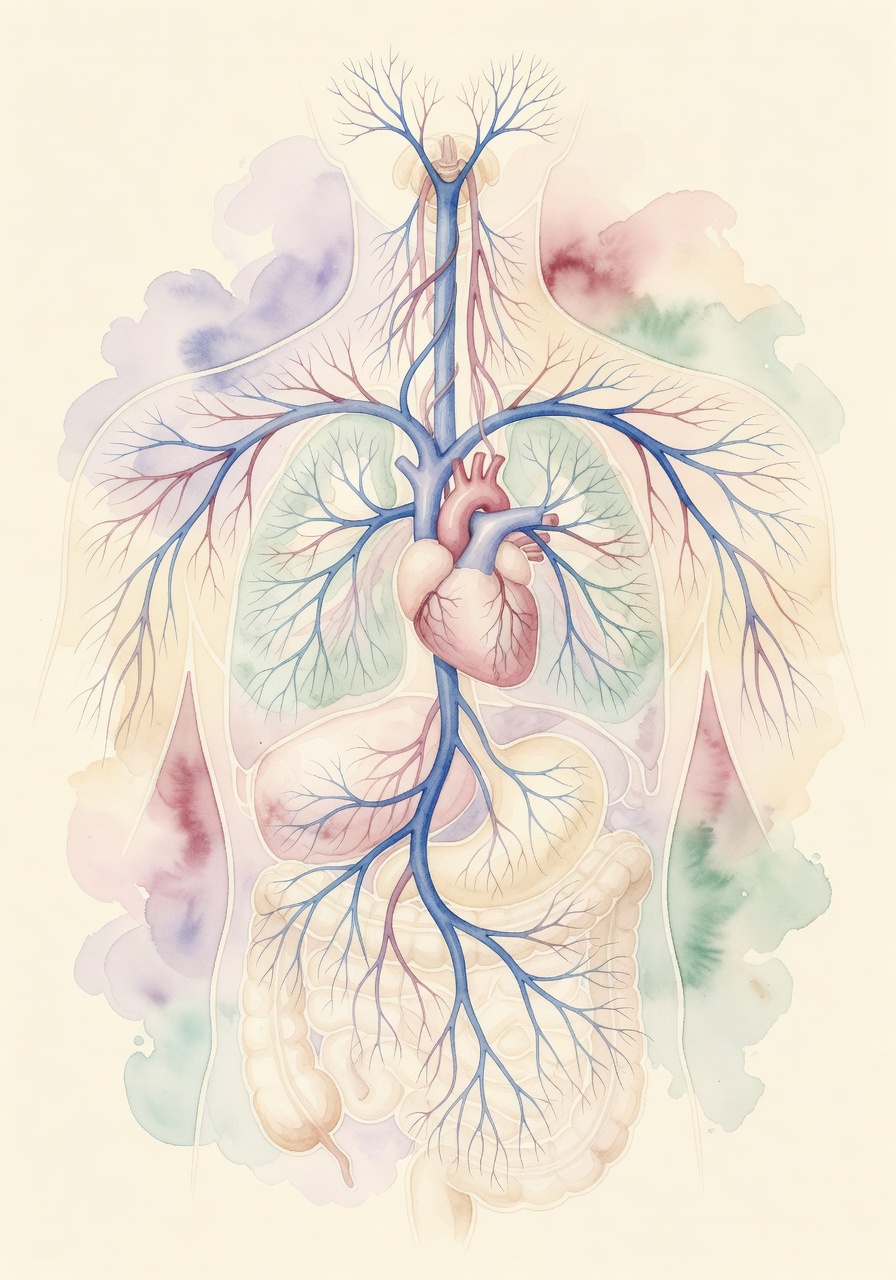
This is a short illustrated continuing-education tutorial for clinicians on dyspareunia — chronic pain with sexual activity — taught through a biopsychosocial and psychosomatic lens. Eight chapters. Each chapter opens with a composite first-person patient vignette and unpacks the clinical principles around it.
The throughline is Maya, a recurring composite patient. Jordan, her partner, opens Chapter 7. Renu, further along in narrative-reconstruction work, opens Chapter 6. The vignettes are composite and anonymized — no patient is depicted; the clinical principles do the teaching.
When the Body Says No
I sat in the car in the parking lot for a long time after that appointment. The doctor was kind. She used the word "fine" four times. Everything looks fine. Your exam is fine. Your bloodwork is fine. You'll be fine. I drove home and I cried in the driveway because if everything is fine, then the only thing left that isn't fine is me.
— Maya, after her third pelvic exam in eight months
You will see Maya in your practice. Maybe she is already on your schedule this week. The presentation is consistent enough that once you have seen four or five of her, you will recognize the shape immediately: a woman in her twenties, thirties, sometimes older, who reports pain with penetration that has either always been there or that arrived sometime in the last few years and has not left. She has been examined. She has been told the exam is unremarkable. She has been handed lubricant. She has tried the lubricant. The lubricant did not work. By the time she gets to you, she has been told some variant of everything looks fine by at least two clinicians, and she is starting to feel like the problem is her capacity to perceive reality.

This is the moment, before you have done anything, where you can make a decision that will shape everything that follows. The decision is this: you will not treat her pain as a puzzle to be solved by elimination. You will treat it as a communication from her body that you do not yet understand.
This course is about that communication. It is about learning to read it.
The biopsychosocial frame, plainly
Dyspareunia — pain with intercourse — is one of the most reliably mis-served presentations in adult clinical practice. It sits at the intersection of three things that medicine is structurally bad at: pain that does not correspond to a visible lesion; sexuality, which most providers were trained to investigate only briefly and then route elsewhere; and the affective texture of a long-term relationship, which most providers were trained not to investigate at all.

The biopsychosocial model is not a fancy way of saying "we'll consider the whole person." It is the recognition that pain is constructed by the nervous system in context, and that the context is always: tissue, history, meaning, relationship, and the moment in the room.
A protective contraction of the pelvic floor in response to anticipated penetration is a physiological event. It is also a learned response. It is also a relational signal. It is also, almost always, a meaning-laden experience for the patient — a verdict on her body, her partnership, her past. None of those layers cancel any of the others out. They co-exist. The pain Maya feels is not "in her head" and it is not "purely physical." Those are not the available options.
The first piece of unlearning the field requires of you is to stop offering Maya those two options as if they were a real choice.
Pain as protective adaptation
The body protects itself from things it has learned are dangerous. The body learns by experience, by association, by repetition, and by emotional weight. When penetration has been painful — for any reason: infection, dryness, a poorly-timed first encounter, a difficult delivery, an assault, a single bad medical procedure — the nervous system files it under "this hurts." After enough filings, the file is no longer a record of past pain. It is a prediction. And a prediction, in the body, is a contraction.
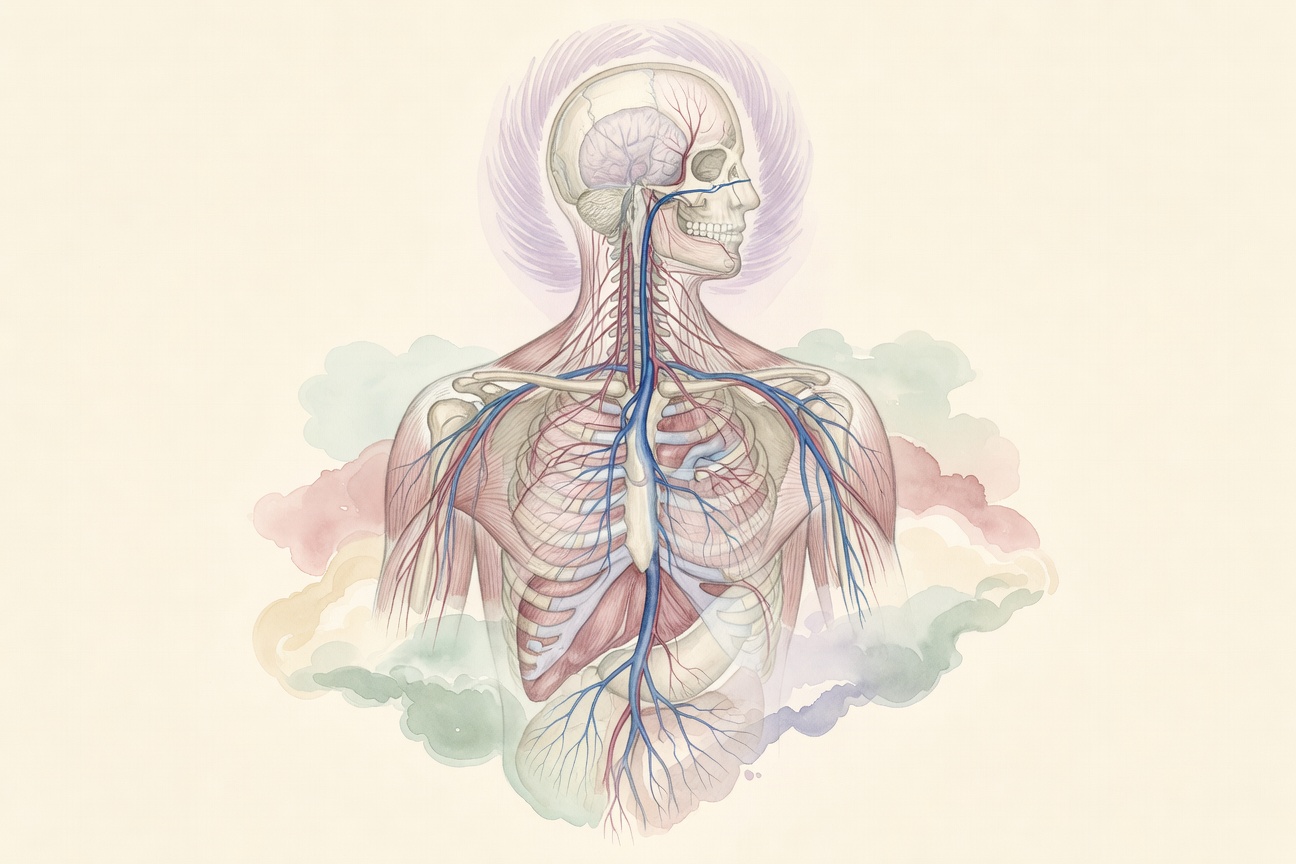
This is not metaphor. The pelvic floor responds to anticipation faster than the conscious mind does. By the time Maya is aware that she is bracing, she has already braced. The brace itself produces pain. The pain confirms the prediction. The prediction tightens the file.
You have seen this pattern in other tissues. A patient with chronic low back pain whose lumbar MRI is unremarkable. A patient with chronic headache whose neurological exam is clean. The pain is real. It is also adaptive. The nervous system is doing exactly what it evolved to do: keep her safe from a thing it has reason to believe is dangerous. It has stopped being a bug. It has become a feature.
Your job is not to argue with the feature. Your job is to help her body learn it no longer needs to deploy it.
What "fix-it" frameworks cost
Notice what happens to Maya when her last three providers each tried to fix this. The dermatologist looked for lichen sclerosus. The gynecologist looked for endometriosis. The urologist looked for interstitial cystitis. Each of them, working within their guild's frame, ruled out the thing that frame can rule out, and then handed her back. Each handing-back was, to her body, another confirmation that something is hidden inside her that no one can find.
This is the iatrogenic loop that runs underneath sexual pain. The fix-it model, applied serially, generates the catastrophizing it then names. By the time Maya gets to you she has been told "it's fine" enough times that her own perception is the only remaining unfine thing. She is being asked to either accept that she is broken in a way medicine can't see, or accept that she is making it up. Both options confirm that something is profoundly wrong with her.
You can step out of that loop. You step out by refusing to make her pain a referendum on her credibility. You step out by saying — early, plainly — I believe you. I think your body is doing something protective. We're going to figure out, together, what it's protecting you from, and we're going to help it learn it doesn't have to anymore. That sentence, said in the first session, does more clinical work than any of the diagnostic workups that preceded you.

What we'll do across this course
Seven more chapters. We'll look at how the body learns pain (and how it can unlearn it). We'll look at the role of trauma, attachment, and the messages your patient was given about her sexuality long before her sexuality was hers to define. We'll learn — and practice — the grounding and regulation tools that let her body be in the room with her clinician, and eventually with her partner, without going somewhere else. We'll talk about working alongside pelvic floor physical therapy without either of you stepping on the other. We'll do narrative reconstruction work — what kind of sexual person she wants to become, now that broken patient is no longer the only available identity. And we'll talk about the partner: the non-pain partner, who has been quietly grieving alongside her and has rarely been asked.
The aim is not a treatment protocol. The aim is clinical fluency in a register most of us were never taught.
One last thing for this opening chapter. The most important sentence in this whole course is not in any of the modules. It is in the closing reflection at the end of chapter eight. I'll give it to you now so you have it from the beginning: What if the goal is not to force the body into sex, but to help the body rediscover safety, choice, and connection?
Hold that question. Everything else is a way of answering it.
The Body's Old Library
The strange thing is, I can tell when it's going to hurt before anything is happening. Like the room changes temperature. My shoulders go up first — I noticed that recently — and then my breath gets shallow, and then we haven't even started yet and I already know. I used to think I was making it up, that I was deciding it would hurt and then it did. Now I think it's the other way around. My body decides, and I'm the last to know.
— Maya, in her fourth session
What Maya is describing — the way her body knows before she does — is not a quirk of her psychology. It is how pain works. And once you understand the mechanism, every part of her presentation stops being mysterious.

This chapter is about the biology underneath the biopsychosocial frame. Not so you can lecture the patient about it (please don't; we'll come to that), but so that when she says something like the sentence above, you hear it as a clinically perfect description of central sensitization and not as a metaphor she's hoping you'll validate.
Pain is a prediction, not a measurement
The classical model of pain — taught to most of us in the first year of training — goes like this: tissue damage produces nociceptive signaling, signaling ascends the spinal cord, the cortex registers it, you experience pain. Linear. Mechanical. Damage in, pain out.
The contemporary model, which has been the consensus in pain science for at least two decades but has not yet fully reached general practice, goes like this: the brain constructs the experience of pain as a protective output based on a continuously updated prediction of bodily threat. The nociceptive signal is one input among many. Context, memory, expectation, mood, attention, relational meaning, and the present-moment threat assessment all feed the prediction. The pain you feel is the brain's best current guess about what level of alarm your body needs in order to keep you safe.

This is not a soft claim. It is the architecture of pain as we currently understand it. The clinical implication is straightforward and large: you can have severe pain with no detectable tissue damage, and you can have substantial tissue damage with no pain at all, because the experience is not a measurement of the damage but a protective response calibrated to the predicted danger.
In Maya's body, the prediction has been calibrated by years of penetration being painful. The pain itself was the data the prediction was trained on. Now the prediction is firing before the data has arrived. Her body has learned penetration as danger. Not metaphorically. Literally. The same circuits that flinch when something flies at your face.
Central sensitization, in one paragraph
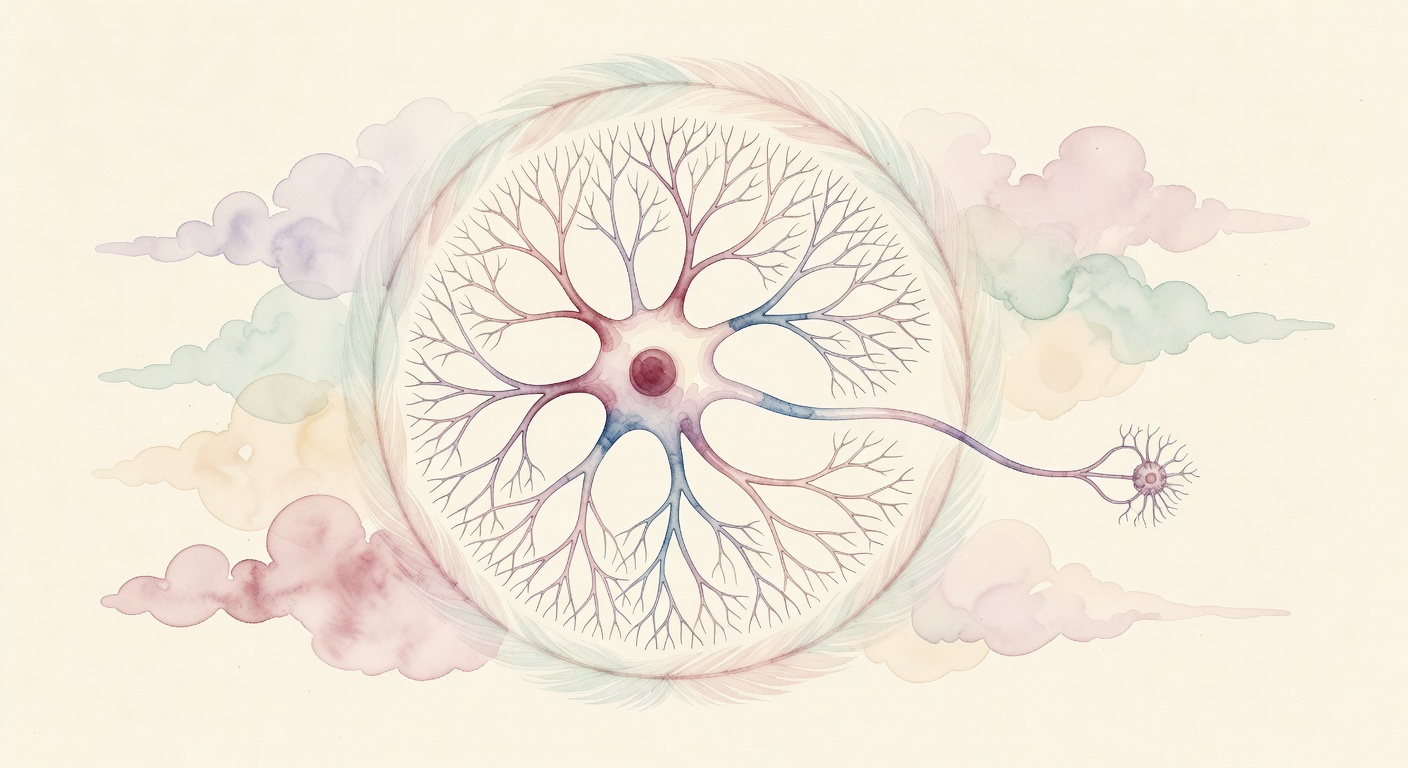
When nociceptive signaling persists for long enough — or arrives loaded with enough emotional salience, even briefly — the central nervous system tunes itself toward higher sensitivity. The volume knob on the relevant pathway gets turned up. Stimuli that previously would not have crossed the threshold of pain now do. Stimuli that previously did, hurt more. The protective contraction that closes a sphincter or guards a joint becomes the resting tone. The dorsal horn neurons rewire their thresholds. The brain regions that interpret the signal as threatening grow more responsive and the regions that down-regulate threat grow less responsive. This is central sensitization, and it is a real, measurable, neurobiological change. It happens in chronic back pain. It happens in fibromyalgia. It happens in chronic pelvic pain. It happens in your patient.

It is also, importantly, reversible. Slowly, with the right inputs, the volume comes back down. The dorsal horn re-tunes. The threat-detection regions soften. The down-regulation circuits regain tone. The whole course we are walking through together is, at the biological level, a course in teaching her nervous system that it can stop bracing.
Hypervigilance, anticipation, conditioning
Maya described her shoulders rising before her conscious awareness caught up. That is hypervigilance — the autonomic nervous system continuously scanning for the predicted threat and mounting a sub-clinical sympathetic response in the absence of any current stimulus. Functionally she is in a low-grade fight-or-flight state any time the context of intimacy approaches. The shoulders, the shallow breath, the dry mouth, the pelvic floor tightening — they are not symptoms of pain. They are pre-emptive defense against pain she expects.
This matters for two reasons. First, because by the time penetration is being attempted, her physiology is already in a guarding posture; the contraction she encounters when she tries is the contraction her body has already started. Second, because the pre-emptive defense is conditioned by context, not by penetration itself. The bedroom. Her partner reaching for her. A certain tone of voice. Saturday night. The smell of his shampoo. The conditioning is associative and broad. She may not be able to tell you what cued it. Her body will know.

You will hear this in session as: I don't even know why, it just started happening before anything had happened. Honor that report. Do not chase her into figuring out the cue. The cue does not need to be identified for the conditioning to be unwound. It needs to be encountered in a state in which the predicted danger does not occur. We will return to this in chapter four.
"Fix it" makes the prediction stronger
This is the iatrogenic twist that no fix-it framework can escape. Every attempt to push through the pain — to try the lubricant, the dilators, the new position, the relaxation playlist, the third glass of wine — is another encoded experience in the library. If the attempt hurt, the prediction tightens. If the attempt did not hurt but happened in a state of bracing and dissociation, the prediction still tightens because the protective response, the bracing, the absence — those got reinforced as the price of getting through it.
The frame you offer Maya in the first months has to interrupt the encoding, not push it. Slow it down. Let her body have experiences of safety in contexts adjacent to the one it is afraid of, without rushing the destination. Every uneventful experience of intimacy-without-penetration that her body files as safe is a counter-entry in the library, and the library updates by counter-entries.
What this changes about your sessions
Two clinical implications follow directly from the science.
First — you treat anticipation, not penetration. Most of your therapeutic action is happening before sex is ever the topic. The bedtime conversation in the kitchen. The way her shoulders settle when she sits down on your couch. The pause before she answers your question. That's where the conditioning is being unwritten or rewritten. Don't aim at the symptom. Aim at the moments around it.
Second — stop validating the prediction. Sympathy that says "I know how scared you are, of course you're bracing, that's so normal" is well-intentioned and clinically counterproductive if it is the only thing you say. Validation without re-prediction tells her body it is right to be scared. The compound move you want is: Of course you brace. Your body is doing exactly what it's supposed to do given what it has learned. And — together — we are going to give it different things to learn. The "and" is doing all the work.

You are now, very gently, in the prediction-updating business. The library is old. It is not closed.
Memory in the Tissue
My grandmother used to say that a wife's body belongs to her household. She said it kindly. She wasn't trying to hurt me. She was passing on what her grandmother had said to her. I'm twenty-nine years old and the first time my partner reaches for me, I am eleven, in my grandmother's kitchen, learning that this part of me is not mine. It takes me a long time to come back from that kitchen.
— Maya, on the messaging she inherited
The previous chapter explained how the nervous system learns. This chapter is about what it has learned, in your patient specifically. Because the same biological mechanism — learned prediction, encoded protection — operates on whatever experiences it is given. And the experiences your patient was given may go back a lot further than her current relationship.

Trauma, broadly construed
Trauma in the dyspareunia population is more common than the official prevalence numbers suggest, partly because the official numbers undercount religious-cultural messaging, partly because they undercount medical trauma, and partly because they overweight large-T events at the expense of small-t accumulation. You will, in practice, see four overlapping populations:
1. Sexual trauma, named or unnamed. An assault. A coerced encounter. A consenting encounter that involved physical pain that was not addressed. A boundary violation in adolescence. A medical examination that was not consented to in a way the patient could feel. 2. Religious or cultural sexual messaging that taught her body, before she had words for it, that her sexuality was dangerous, dirty, owed, or not hers. 3. Attachment trauma — early relational experiences in which her bodily signals were ignored, overridden, or punished. The child whose tears were dismissed grows into the adult whose pelvic floor tightens silently and does not interrupt. 4. Medical trauma specifically — birth injuries handled without informed consent, painful pelvic exams normalized, the first IUD insertion experienced as assault but never called that.
These categories are not exclusive and most of your patients have some combination. Do not require the patient to identify which one applies before you can work. The body knows. The body will tell you, in the timing of its bracing, what it remembers. Your job is to be the witness who can hear it.
Implicit body narratives
Bessel van der Kolk's central observation — the one that has done more clinical work than any sentence in the field in the last twenty years — is that the body keeps a record of what the conscious mind cannot tolerate to hold continuously. The record is not narrative. It is procedural. It lives in the way the patient sits down, the way her shoulders rise when her partner enters the room, the way she avoids her own pelvis when she's stressed, the way she has not been touched in the small of her back in eleven years and has never told anyone.
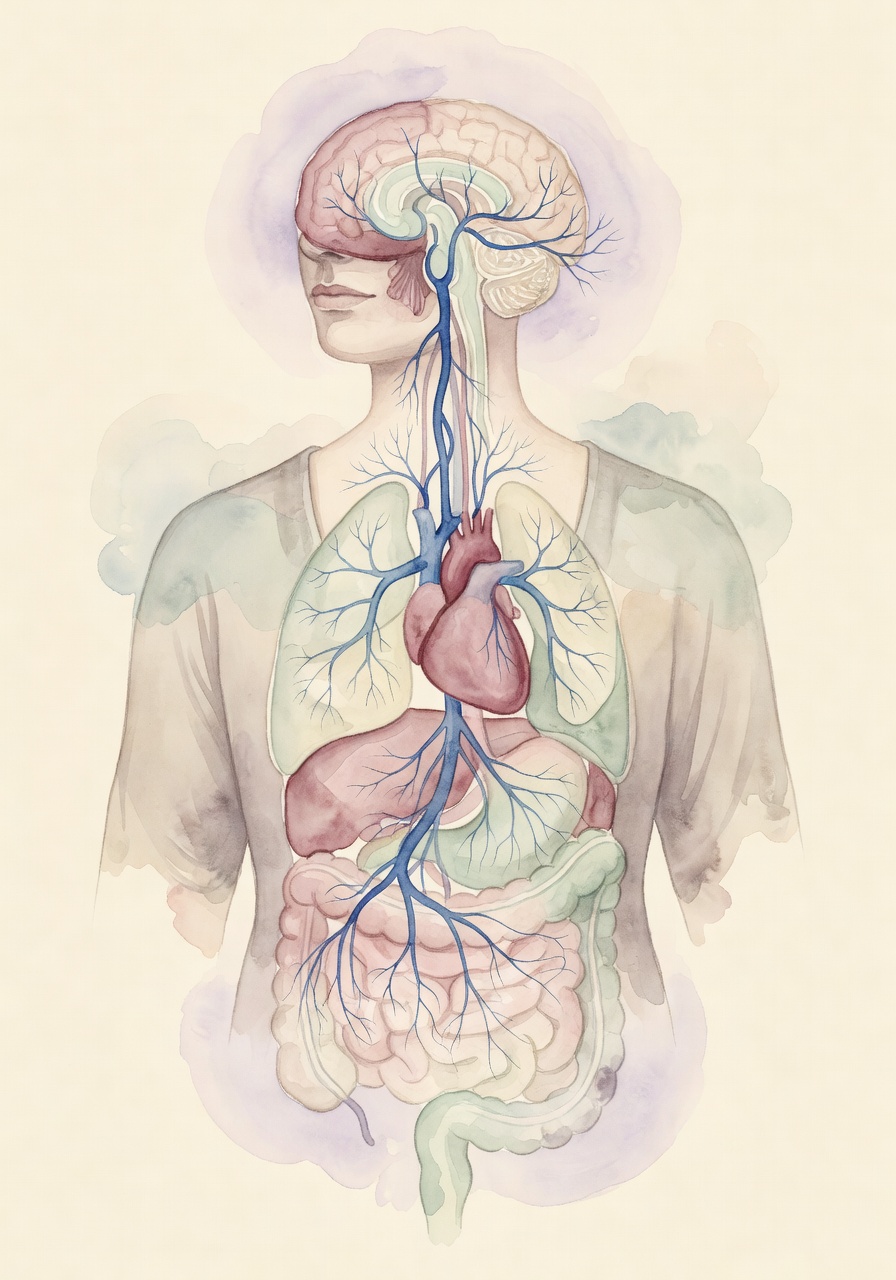
You will encounter these implicit narratives long before you encounter their explicit versions. A patient who cannot tolerate a certain inflection of her partner's voice without knowing why. A patient whose pain spikes only on Sunday mornings. A patient who is fine with all kinds of touch except on the inside of her elbow. The body has stored something there. You do not need to excavate it. You need to honor it as data and let it inform pacing.
Freeze, fawn, and the false report of "I'm okay"
In trauma-informed sex therapy you will encounter freeze and fawn more often than fight and flight, because fight and flight do not pair well with sustained relationships, but freeze and fawn do.
Freeze in the dyspareunia population looks like: physiologically present, neurologically vacated. The pelvis is responsive at the surface — there is lubrication, there is willingness — but the cortex has gone somewhere else. The patient reports the experience the next day as "I don't really remember most of it" or "I sort of watched it happen." Dissociation is a protective adaptation; do not pathologize it. Recognize it as a sign that the nervous system did not feel it could afford to be in the room.
Fawn looks like: the patient prioritizing her partner's comfort, including over her own pain. She lets it continue when it hurts because his disappointment, his sadness, the conversation that would follow — all of those outweigh her pelvic floor's report. She emerges from these encounters with worse pain, deeper guarding, and the conviction that she has failed him. The fawn response is not weakness or codependency. It is a body that learned, somewhere, that other people's needs were the safer thing to track.

The clinical move when you spot either: slow down what is being asked of her. The body that froze or fawned needs the option to not do that again. Many of the early sessions are quietly about restoring the patient's right to say no in real time, including to her partner, including to the encounter she previously would have submitted to.
The clinician's countertransference
This is the chapter to name your own response in the room, because the trauma population in dyspareunia surfaces specific clinician reactions you should be able to track in yourself.
The first is rescue urgency. You want to fix this faster than the work allows. The patient's suffering reads as actionable, and your training has tilted you toward action. The rescue urgency will, if you do not catch it, become subtle pressure on the patient to be further along than she is. She will feel it. She will fawn for you. The rescue urgency is yours. Do not let her metabolize it.

The second is discomfort with sexual content. Many clinicians, including those who have been doing this work for years, carry their own subtle aversion to specific kinds of sexual conversation. If a particular content area makes you brisk, or makes you change the subject smoothly, or makes you abstract a concrete report into a category — note that. Your patient's pain often lives precisely in the territory you are skipping past.
The third is identification with the partner. If you are partnered, you may, especially in the couples chapter, find yourself sympathizing with the non-pain partner's frustration. That sympathy is appropriate and clinically useful (we will use it in chapter seven). But if it tips into pressure on the patient — can't you just see how much he loves you — it has stopped being clinical. Bring it to supervision.
What the patient is not
Two things to stop saying, ever, even with the most careful softening:
> "You're not broken."
She will hear broken. The frame is yours, and the frame leaks. Just don't introduce the word.

> "Your body is letting you down."
It isn't. Her body is doing exactly what it was built to do. It is protecting her with the resources it has, including the resources she was given by her grandmother in a kitchen she does not consciously remember.
What you can say, and should say, often: Your body has been a careful keeper of you. We're going to listen to what it has been keeping.

That is the sentence that opens the door to chapter four.
Coming Back to the Room
She asked me to feel the chair. Not in a weird way. Just — feel the chair. Where my back is touching it. Where my thighs are pressing into the cushion. I noticed that my feet had been hovering off the floor the whole session and I hadn't known. I put them down. I felt the floor. I started crying, which surprised me. Apparently I had not had my feet on the floor for a while.
— Maya, on her first grounding sequence in session
This is the most practical chapter in the course. You are going to learn — and rehearse, in your own body, before you offer it to a patient — a small set of grounding and nervous-system regulation moves that are the bread and butter of this work. They are simple. They are not easy. The patient cannot do them if you cannot.
The window of tolerance, plainly
Dan Siegel's window of tolerance is the working zone in which the nervous system is regulated, present, and capable of being in contact with experience. Above the window, the patient is hyperaroused — anxious, hypervigilant, in sympathetic activation. Below the window, the patient is hypoaroused — numb, dissociated, in dorsal-vagal shutdown. In either state, the cortex is offline for the kinds of integration therapy depends on. The patient may look like she is in the room with you while she is, in fact, not.
The width of the window is not fixed. Trauma narrows it; safety widens it. Most of the clinical work in dyspareunia is window-widening work, not topic-content work. It is more important that she stay in her window for forty-five minutes than that you cover a particular agenda. The agenda will return next week. The window is what you are training.
You watch the window the way a respiratory therapist watches breath: continuously, gently, with quiet adjustment as the indicators move.
Indicators that the window has narrowed
You will learn to read these without thinking about them, but for now name them explicitly:
- The patient's voice flattens or speeds up. - Her eyes lose focus, or fixate on one spot. - Her shoulders rise. Her breath rises into the upper chest. - She gives factual answers to emotional questions. - She uses the second or third person about her own body ("you know how it gets") instead of "I." - She becomes very polite, or very compliant, or apologizes for being a difficult client. - A long silence, then a small tight smile.
Any one of these is a flag. Two together is a signal. When you see the signal, you stop whatever line of inquiry you were on and you orient.
Orienting — the first move
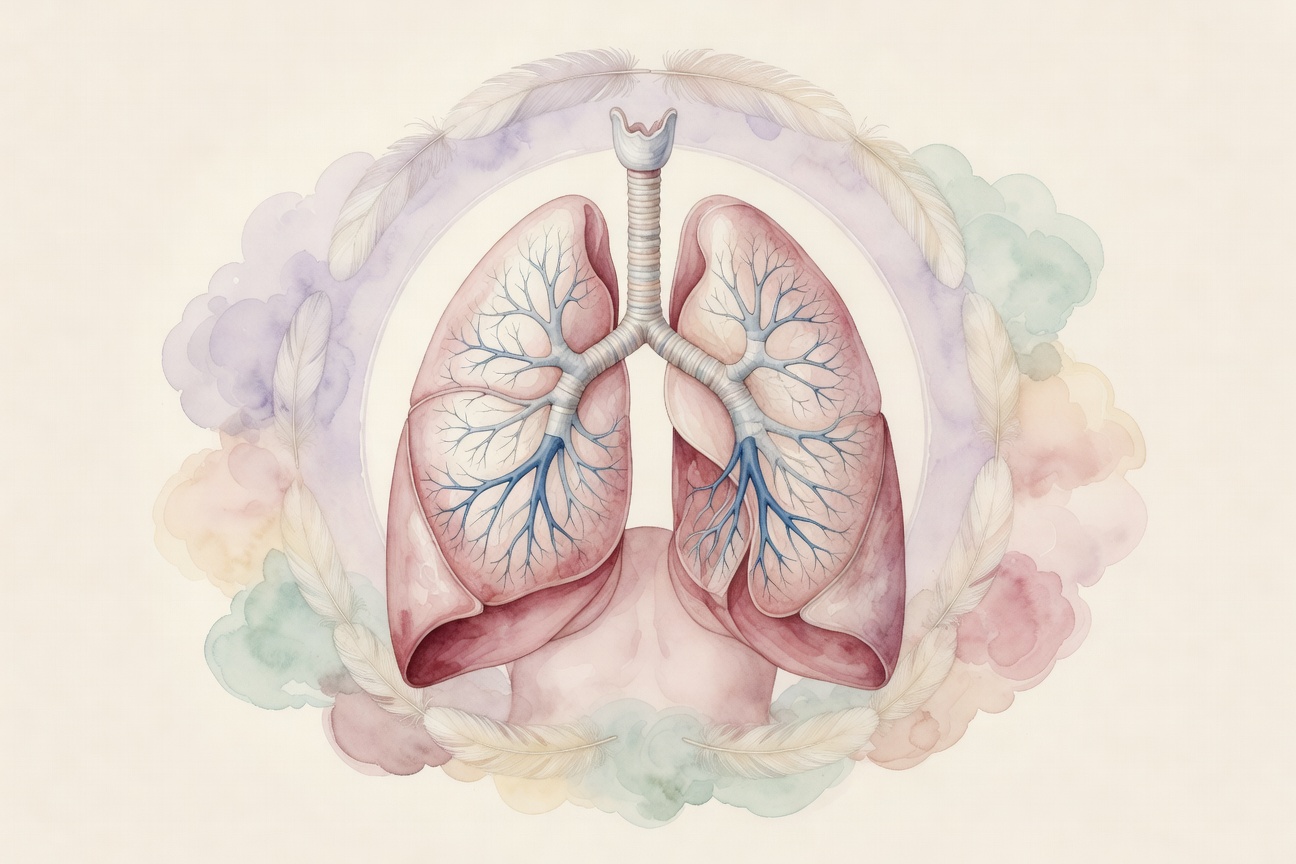
Orienting is the simplest somatic intervention there is, and it is the right move ninety percent of the time when the window narrows. It is just this: invite the patient to look around the room.
> "Can you let your eyes find a few things in the room? Take your time. Just look around. You can let them rest on whatever catches your attention."
Wait. Do not narrate. Watch her eyes do the work. Orienting recruits the visual cortex into the present moment and signals the brainstem that the environment is safe enough to scan, which is something a hypervigilant or dissociated nervous system cannot quite do under its own steam.
You will see her face change. You will see the breath move down. The window has reopened. Now you can come back to the topic — or you can let the silence rest and ask her what she noticed, and follow that.
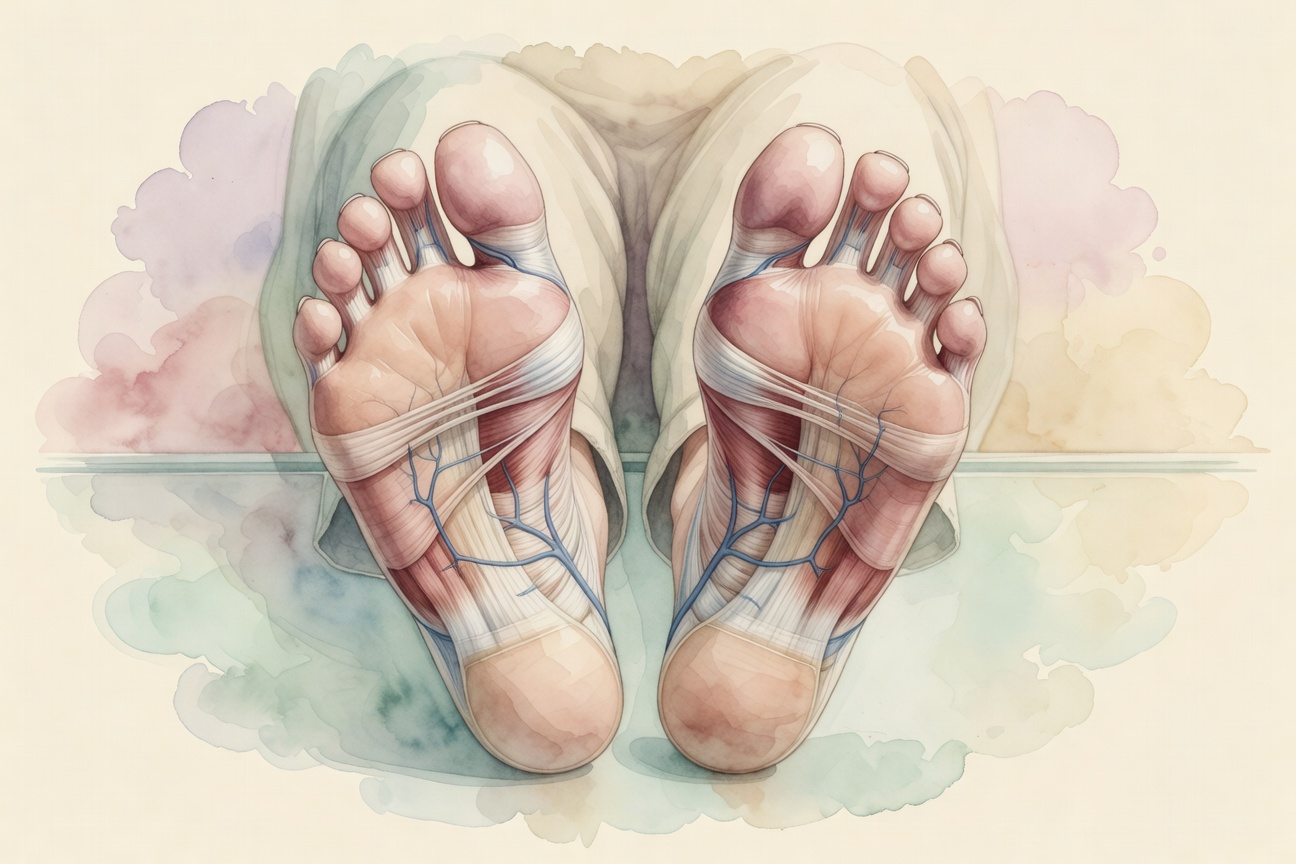
Grounding through the soles
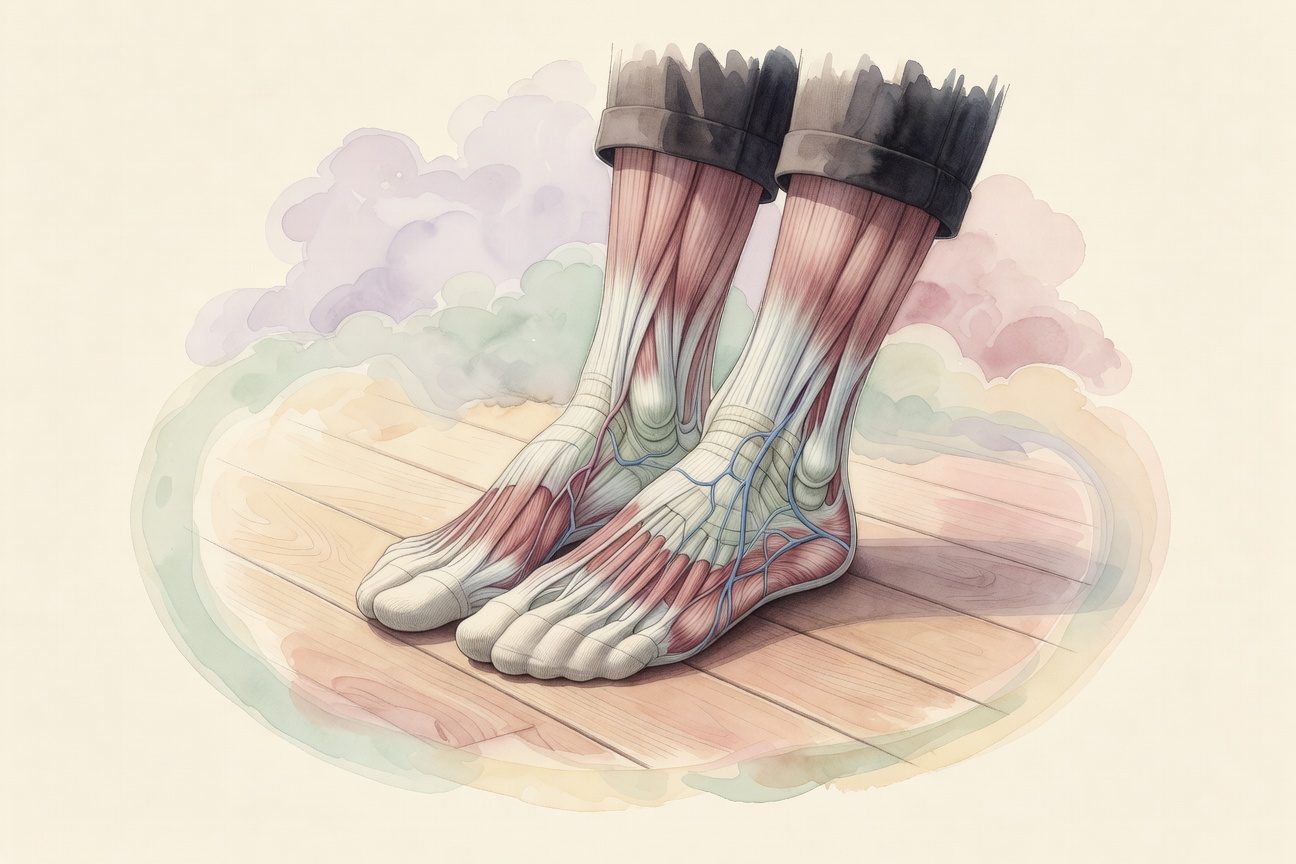
The second move, even simpler. Cue the soles of the feet.
> "Can you let me know what your feet are doing right now? Are they touching the floor? Can you feel the floor through your shoes?"
If they are not on the floor — and they often are not — invite her to put them down. Wait. Let her notice. You may say something like Take your time to actually feel where the floor is. Then nothing.

The body that has been holding itself half off the floor in a chair for an hour will register the floor as a small, unexpected gift. Some patients cry. Some patients laugh. Many patients look surprised. You will get a clear signal that the parasympathetic system has come online.
Breath, briefly and honestly
A note on breathwork. Most patients have been told to "take deep breaths" by enough providers that the instruction has become an irritant and, for some trauma populations, a trigger — being told to breathe deeply when you cannot is a small reenactment of being told what to do with your body. Do not start with breath. Start with orienting and grounding. Once the window is open, breath will adjust on its own.
If you do return to breath later, the move that works without re-triggering is extended exhale, not deep inhale. Have her exhale a beat longer than she normally would, with a slightly open mouth, and let the inhale come on its own. The extended exhale is the only consciously-accessible parasympathetic lever; it loops directly into the vagus. Three of those, then leave the breath alone.
Co-regulation
Your nervous system is doing half this work. If you are dysregulated — running late, hungry, in your own activation about the case — she will feel it. The patient with a narrow window is exquisitely attuned to the regulation of the person across from her. She will read your face, your shoulders, the tension at the corners of your mouth.
Show up regulated. Sit slightly back. Let your own face soften. Let the silence be long enough that it is not interrogative. Be the steadier nervous system she can borrow from for the hour she is with you. That is co-regulation. It is the largest single thing you are doing in the session, and it is doing more than the content of your interventions.
What the patient takes home
A small set, deliberately small, because patients with narrow windows cannot remember a list of seven things under stress. Pick two, with her, that she can practice between sessions. Most often:
1. The doorway pause. Before entering the bedroom — any night, not just sex nights — she stops in the doorway and feels her feet, takes one extended exhale, and lets her eyes scan the room before going in. Thirty seconds. The bedroom is being slowly re-coded as a place she enters consciously, not a place she is delivered into. 2. The five-thing scan. Anywhere, anytime, especially during intimacy: name five things she can see, four she can feel, three she can hear, two she can smell, one she can taste. The classic 5-4-3-2-1 from trauma work. Practiced outside intimacy first, so it is available during.
Notice what is missing from her homework. Anything goal-oriented. Anything that puts a body part on a schedule. Anything that requires her partner's participation. The home practice is only about the window. The window does the rest.
A note on language
Two phrases to retire from your vocabulary in this work:
- Performing — as in "performing sex." It places the patient as an actor in front of an audience. Replace with experiencing. - Get through it — as in "if you could just get through the first few minutes." The job is not to get through anything. The job is to be present for what is. Replace with be with, stay with, notice.

These are not euphemisms. They are clinical instruments. The words the patient inherits from you become the frame she uses about her own experience for the next ten years.
Two Doors, One Hallway
She gave me her card on the way out of session. It said pelvic floor physical therapist. I held it in the car like it might bite me. I had been told for a year that there was nothing wrong with my body. Now there was someone whose whole job was to put hands on my pelvic floor. I was supposed to be relieved. I was furious. I called my therapist from the parking lot.
— Maya, on the morning of the referral
You will make this referral often. It is one of the most clinically powerful moves in this whole field. It is also one of the most easily fumbled, because the patient experiences it as a verdict and you experience it as a logistic. This chapter is about the relational work around the referral, the choreography between you and the pelvic PT, and the trap of split care.
What pelvic PT actually does, briefly
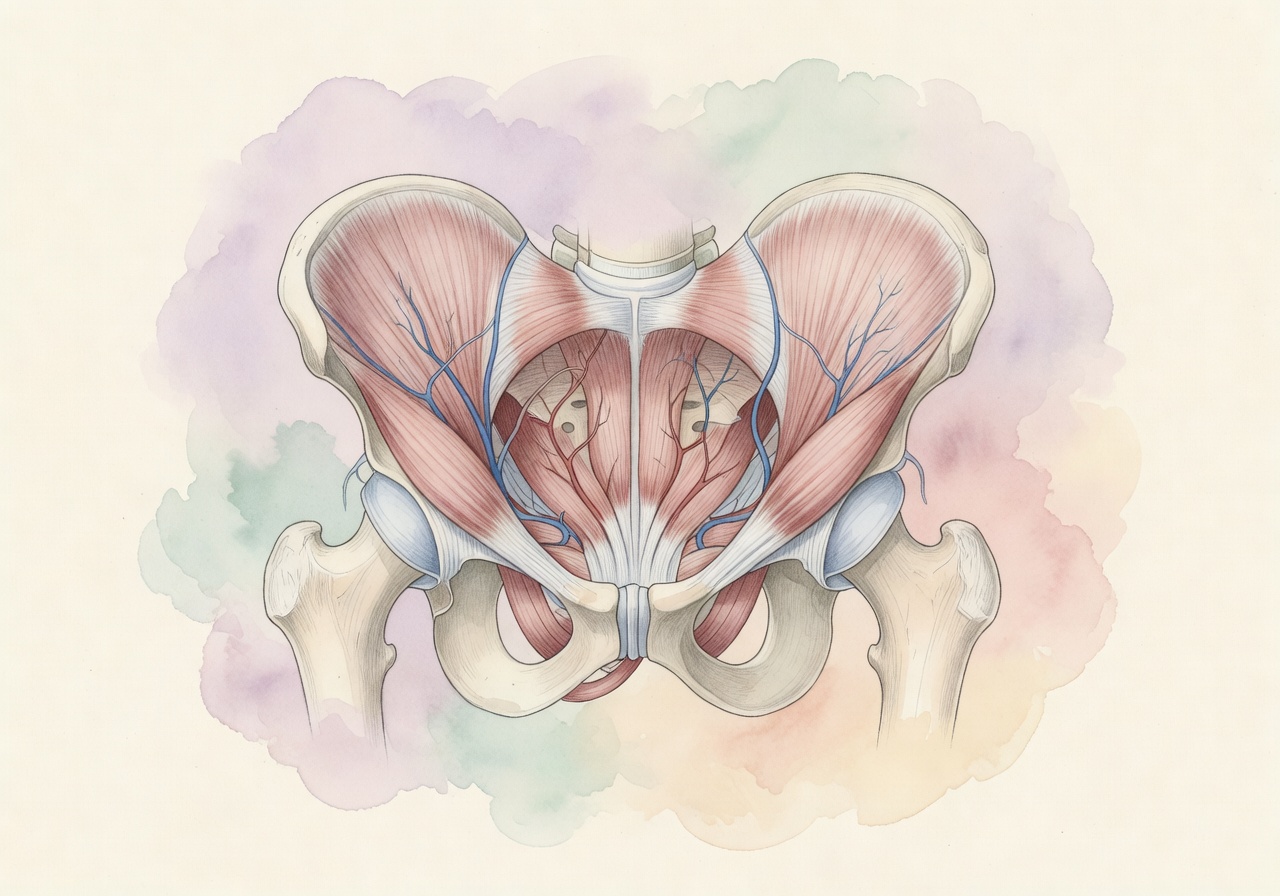
Pelvic floor physical therapy is a specialty within physiotherapy focused on the muscular, fascial, and neural function of the pelvic floor and surrounding structures. For dyspareunia, the relevant interventions usually include some combination of: manual myofascial release of hypertonic pelvic floor muscles, gentle nervous-system-aware desensitization of the vaginal opening and surrounding tissue, education in down-regulation rather than the "do your kegels" pattern most patients have absorbed from postpartum culture, dilator or wand work paced by the patient herself, and breath and posture work as it relates to pelvic-floor tone.
The good pelvic PT is, in your language, trauma-informed and nervous-system-aware. She works at the speed of the patient's window of tolerance. She does not push through. She names what she is about to do and asks before she does it. She has, herself, more than passing fluency in the somatic territory you've been learning.
The bad pelvic PT — and they exist — treats the pelvic floor like an isolated muscle group that needs to be "released" by external pressure, schedules dilator escalation by week regardless of nervous-system response, and gives the patient homework in the body-as-machine register. You can do real damage by routing a fragile patient to the wrong PT. Vet your referrals. Build relationships with two or three you know personally and trust.
The referral conversation
The referral, in session, is a small clinical event you should treat as such. Do not slide it in at the end. Do not present it as the next box.
Frame it as: We have done meaningful work on what your nervous system has been protecting you from. Your body is also carrying tissue-level patterns — muscle tone, fascial tension — that have been part of how the protection got expressed. There is a kind of physical therapist who does this work alongside therapy like ours. Her hands-on work and our nervous-system work do different things. Together they make each other more effective. You will still be the one in charge of what happens to your body. Nothing she will do is something you have not agreed to. Want me to tell you a little about her?
Notice what that frame does. It locates the PT as collaborative, not corrective. It locates the patient as in charge. It pre-empts the verdict reading. It asks consent before the information continues. The patient who feels she is being handed off will close. The patient who feels she is being augmented will open.
The trap of split care
Split care happens when the therapy and the body-work each operate in isolation, with the patient as the connective tissue. The patient is asked, every week, to integrate the somatic content of the PT session with the relational content of the therapy session, and to do so during a presentation in which integration is precisely the capacity that has been compromised. This is the wrong way to use both of you.

Avoid it by being in direct contact with the PT. With the patient's permission, exchange notes — actual notes, not voicemail tags — once or twice a month. What is her window doing? What tissue work is the PT introducing this month? Is the homework the same homework you would have given? Is there a topic the patient brought up in PT that she has not brought up in your office?
The patient should know you talk. She should sign the consent for it. She should know the contents are about her care, not gossip, and that she can review the notes. The transparency does work. When she discovers — and she will discover — that you and the PT have spoken about her once or twice in the last six weeks, the discovery should produce relief, not betrayal. You are the team. She is the team's purpose.
Pacing — the PT works slower than you think she should
A patient with central sensitization and conditioned protective response cannot tolerate the standard PT progression. The textbook protocol — dilator three twice a week, dilator four next month, vaginal entry by week eight — is a recipe for re-encoding the threat library. A good pelvic PT knows this and will run a pace that may, to a fix-it-trained eye, look glacial.
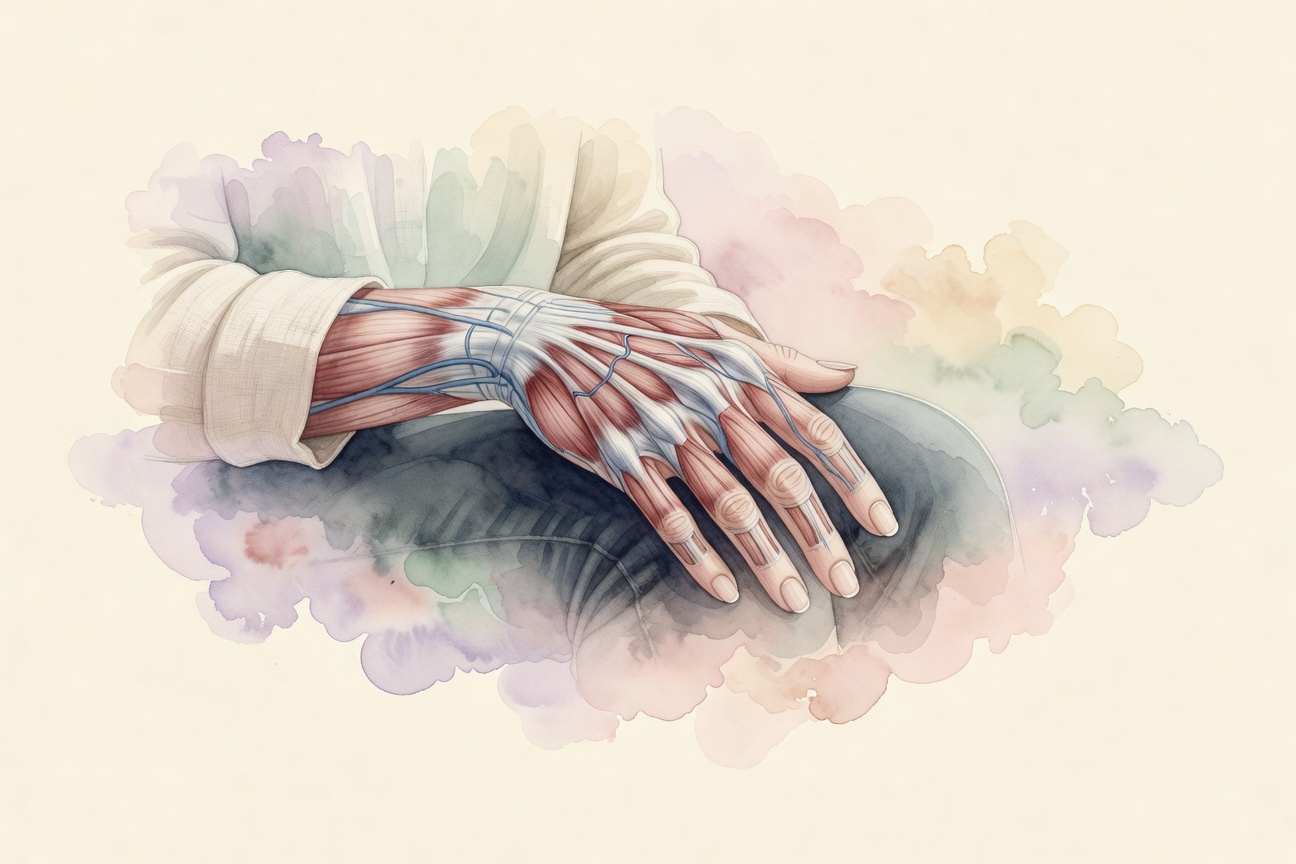
Your job here is to defend the slowness. The patient will, at some point, pressure herself to "get further along." Her partner may pressure her. Her family physician may pressure her. You will be tempted to pressure her, because progress in the PT work looks more legible than progress in the therapy work. Resist. The week she leaves dilator-one at the bedside untouched and instead does the doorway-pause and an extended exhale is, biologically, more productive than the week she pushes through three dilator sessions and dissociates through each one. The PT, if she is good, will tell the patient the same thing in her own language.
When PT is not the next move
A subset of patients should not be referred to PT yet. Two clinical pictures in particular:
1. The window is still too narrow for hands-on work to be tolerable. If the patient cannot sustain her own grounding through a non-genital somatic exercise — say, hand-on-the-belly noticing — she is not ready for vaginal manual therapy, no matter how gentle the PT is. Continue regulation work. Re-evaluate in six to twelve weeks.
2. The patient is in active trauma processing and the introduction of pelvic touch by an unfamiliar provider will derail the processing. Sequence matters. Sometimes the right order is twelve weeks of trauma-informed somatic work in your office, then the referral, not the other way around. Talk this through with the patient. She knows.

Empowering the patient inside medical treatment
You can do one more thing of disproportionate value: teach her, before her first PT session, the script she has the right to use at any moment, with any provider, including the PT:
> I need a pause.
Five words. She gets to use them. The provider will stop. The provider will not be angry. The provider will not be disappointed. The body that has spent thirty years being told that medical providers' timelines outrank its own gets a different message: that her I need a pause is the senior signal in the room. Practice the sentence in session. Have her say it out loud. The first PT visit will go better because she rehearsed it. Subsequent visits will go better because she used it once and the world did not end.
This — the patient with five words in her back pocket — is the patient who collaborates in her own care. That is the patient pelvic PT can actually help.
Re-Authoring the Story
For a long time the only sexual identity I had was patient. That was the whole story — I was a person with a problem, and the problem was located in a part of my body, and the part of my body was the only thing about my sexuality that anyone had wanted to talk to me about for four years. The first time my therapist asked me what kind of erotic person I wanted to become, I laughed out loud, because nobody had ever asked me that. The question alone was the first sex life I'd had in months.
— Renu, four months into narrative work
By the time you are sitting with Renu, the early work is largely done. The window is wide enough to hold a real conversation. The pelvic floor has begun to release. There is some uneventful intimacy in her life that her body has filed as safe. And now a new problem appears, which the previous chapters did not prepare her — or you — for: she does not know who she is sexually, because the only sexual identity she's had for years was the diagnosis.

This chapter is about the slow, careful work of helping a patient re-author her sexual narrative. It is the move from clinical recovery to erotic agency. It is also the chapter where you become less useful to her, which is, paradoxically, when you are doing the most useful work.
The failure-based sexual script
Every patient who has had a chronic sexual pain presentation has, by the time you meet her, written and rewritten the same story about her sexuality. You will recognize the story:
- The body is the obstacle. - The relationship is fragile in this dimension. - Sex is a performance, with a defined endpoint, that she has been failing at. - Pleasure is what other women get to feel. - The most realistic future is one in which sex is endured rather than enjoyed. - If she could just be normal, this would all be fine.
This is the failure-based sexual script. It is not a thought. It is a structure. It shapes which futures she can imagine, which fantasies she allows herself, which conversations she can have with her partner, and which questions she can hear from you. The script is the operating system, and most of her early sessions have run on it without either of you naming it as the script.

You can name it now. I want to point at something — there is a story you've been carrying about your own sexuality, and I think it has shaped almost every conversation we've had. It's the story that you're broken, that sex is a performance, that pleasure is a thing that happens to other people. Can we look at that story, as a story, and decide together whether it's the one you want to keep telling?
She will pause. Possibly for a long time. The work has begun.
Externalizing the script
Narrative therapy's central move — Michael White's old gift to the field — is to externalize the problem. The script is not her. The script is a thing she inherited, built, was given. It came from her grandmother in a kitchen. It came from a magazine she read at sixteen. It came from her first painful encounter. It came from four years of doctors who could not find anything. It came from the structure of the medical encounter itself.
Give the script a name. The Verdict. The Endless Audition. The Old Script. Once it has a name it is no longer her — it is something she can hold at arm's length and inspect. Patients often laugh, a little, when they name it. The laugh is significant. It is the first time in years she has been bigger than the story.
Three narrative interventions
Three concrete moves, each carrying weight, in roughly this order:

1. Sexual timeline mapping
A literal timeline, drawn on paper, with her. Earliest memory of being a body. Earliest message about what kind of body it was. First curiosity. First touch she initiated for herself. First partnered encounter she chose. First encounter she did not choose. First pain. First time she pretended the pain was not there. First time she said it was.
The timeline is not a confession. It is a map. The patient who sees her own history laid out on paper sees, often for the first time, that the pain has a story. The story has chapters. Some chapters were inherited. Some chapters were authored by other people. Some chapters she has the right to revise.
2. The pleasure inventory
Not "what turns you on." That question, asked of a patient still inside the failure script, returns the wrong answer because it routes through performance. Ask instead, with patience: what kinds of physical experience, anywhere in your body, in any context, do you find pleasurable?
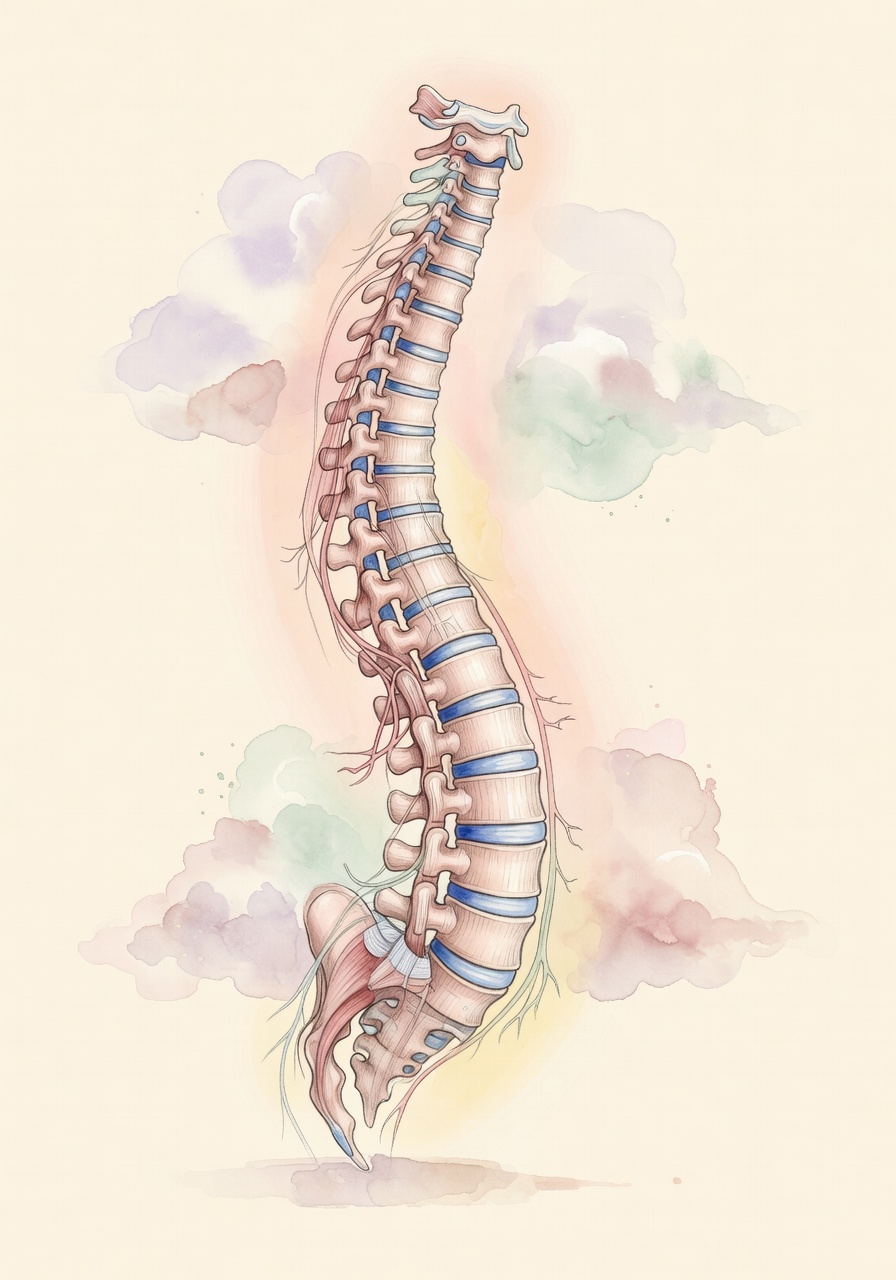
Sunlight on her face. The first sip of coffee. Her own warm bath. Stretching after a long walk. A cat on her chest. Cold cotton sheets in summer. The weight of a heavy blanket. Her partner's hand on the back of her neck. A song. Slow dancing in the kitchen.
The inventory does two things at once. It widens her definition of pleasure beyond the genitally-defined version she has been operating on, and it gives her a body of evidence that her capacity for pleasure has been operating, undamaged, the whole time she thought she was broken. Most patients have never made this list. Most patients, looking at the completed list, cry.
3. Re-authoring the future scene
The classic narrative therapy "unique outcome" or "preferred future" move, adapted for the erotic register. Ask: if you could write a single small scene of intimacy six months from now — not the grand finale, just one ordinary scene — what is happening in it? What are you doing? What is your partner doing? What does the room feel like? What is your body feeling? What is your body NOT having to do?
That last clause carries unexpected weight. The future scene most often gets written by what it does not contain — no bracing, no performance, no clock, no checking on his disappointment. The clinical use of the scene is not as a goal. It is as a horizon. She has a small scene she has imagined as a possibility. The possibility itself widens the window.
"What has your body been protecting you from?"
There is a single therapeutic question you will use, repeatedly, in this chapter of the work, and it is worth memorizing in the exact phrasing:

> What has your body been trying to protect you from?
The grammar is the intervention. Not what's wrong with your body. Not what's the trauma. Not what are you afraid of. Subject: your body. Verb: trying to protect. The patient is positioned as the protected party. The body is positioned as the protector. The protection is positioned as ongoing and intentional, even if its current form is no longer needed.
You will get answers across months. The first answers will be partial. From bad partners. From my mother. From getting too close. From being asked to do something I didn't want to do. From being told my answer doesn't count. Each answer is a chapter title in the new narrative. Your body is not the protagonist's adversary. It is her oldest ally.
That single reframing — the body as ally, not obstacle — is the engine that drives the rest of the recovery. Everything from here is the patient learning, in conversation with her own body, what it wants to do now that it is no longer required to brace.

The clinician's quiet exit
Late in this phase you will notice that the patient is bringing in more of her own material and asking for less of your scaffolding. The sessions get a little lighter. She makes jokes. She tells you about a small intimate moment she did not have to debrief — she just had it. This is the work succeeding. Resist the urge to fill the lightness with new agenda. Resist the urge to be necessary. The patient becoming her own narrator is not your displacement. It is your purpose.
The Two of You
Nobody ever asks me how I am. I'm the husband. I'm the supportive one. I read the books. I learned the words. I know the right things to say. I am not allowed to be tired. I love her. I am tired. I have been tired for a long time. I sit in the waiting room of her physical therapist some weeks, and I watch the other husbands sit there, and we all do the same thing, which is nothing. We just sit.
— Jordan, in his first individual session
You may not see Jordan for a year. The non-pain partner is the most consistently under-served person in this clinical picture. He has been carefully not asking for anything, because asking has come to feel like pressure, and pressure has come to feel like betrayal. He has been managing his own grief, his own frustration, his own erotic disappointment, and his own private worry that he is a worse person for having any of those feelings.

When he finally gets to your office — usually because the primary patient brings him in, or because she has begun to recover and he, who held still through the worst of it, can now afford to fall apart — you have one chance to make him welcome. The chance is in the first five minutes.
This chapter is about working with the couple as the unit of care, and about working with the non-pain partner as a patient in his own right.
What couples work in this presentation actually is
Most couples therapy, at its best, increases the relational bandwidth between two people. Couples work in dyspareunia is unusual in that for most of its arc it decreases the relational bandwidth around sex specifically, on purpose, in service of letting the bandwidth grow back from underneath.
That sounds wrong on first reading. Read it twice. The couple has been operating, often for years, in a relational mode where sex is the unspoken weather of every encounter. Did she seem tired tonight? Did he look at her too long? What did the kiss at the door mean? Was that "I love you" weighted? Every gesture is being read for its implication about the central wound. The couple is exhausted by the constant low-grade interpretation.

Your first move with the couple is to lift the load of interpretation from every interaction. We are not, this month, doing anything in the bedroom. We are not negotiating for sex. We are not testing. We are not measuring progress. That is taken off the table by clinical decision, not by avoidance. The space that opens up underneath that decision is where the actual repair happens.
The grief of the non-pain partner
Jordan needs space to grieve, and most therapists do not give it to him because his grief reads as inconvenient to the patient's healing. He grieves: the sexual life he expected, the easy access to her body he used to have, the lightness around touch that has gone heavy, the implicit understanding that his desire was welcome, the years they will not get back, his own slowly-eroding sexual confidence, his fear that even if she recovers it will be too late for them.
He has not said any of this aloud because every adjacent forum punishes the saying of it. He cannot tell his friends without sounding like an asshole. He cannot tell her without adding to her pain. He cannot tell her therapist without feeling like he is selling her out. He has been carrying the grief in privacy with no witness for years.
The most therapeutic minute of his first session is the minute in which you do not flinch from any of it. He says he is tired. He says he is angry sometimes. He says he has wondered if he should leave. He says he has stopped initiating for so long that he is not sure he could initiate anymore even if she wanted him to. You sit with him through every line, and you do not redirect the conversation to her well-being.

When he is done, you say something like: That is a lot to have been holding alone. Of course you are tired. None of what you've described makes you a bad partner. It makes you a person who has been doing a hard job for a long time without being seen doing it. He may cry. He may not. He will, either way, settle into the chair differently for the rest of the hour.
Reducing the pressure cycle
The pressure cycle in this presentation goes: partner initiates → patient braces → encounter aborts or proceeds painfully → both partners experience small failure → partner reduces initiation to avoid causing harm → patient experiences reduced initiation as rejection or loss of desire → patient internalizes she is no longer wanted → patient pressures herself to initiate → encounter aborts or proceeds painfully → repeat.
The cycle is generated by the couple's good intentions. Each of them is trying to be careful. Each carefulness is producing the next round of the cycle. The therapeutic intervention is not to teach them better communication around sex. The therapeutic intervention is to interrupt the cycle by removing sex from the negotiation entirely for a defined period.
Concretely: agree, in your office, with both partners present, that for the next four weeks (or six, or twelve — clinically calibrated) there will be no sexual initiation in either direction. None. No subtle attempts. No testing. No "we could if you want to." A clean container. Inside the container, they do other things: hold hands, slow-dance in the kitchen, take baths together if that is in their repertoire, sleep in the same bed without negotiation about what that means.
The patient's body, for the first time in years, does not have to be on guard about being asked. The partner, for the first time in years, does not have to be on guard about whether to ask. Both nervous systems exhale.
Sensate focus, paced
When the container has produced visible regulation in both partners — and you will see it, in the way they sit on your couch — you can introduce sensate focus, the Masters-and-Johnson tradition, in its modern paced form.
Stage one: structured non-genital touch sessions in which one partner touches the other for the toucher's own curiosity, not the receiver's pleasure. The receiver's job is to notice. The toucher's job is to be interested. No goals. No outcomes. Twenty minutes, then switch roles. Genitals and breasts off-limits.
You will hear, often: We haven't touched each other like that since the very beginning. That sentence — said with surprise — is the marker that the work is taking.

Stages two and three of sensate focus open the territory back up incrementally, on a timeline calibrated to her window and his patience, not to either partner's frustration. Many couples do not need or want to go past stage two for a long time. The relational rewiring is largely accomplished before genital contact ever reenters.
The partner's own therapist
Where it is feasible, refer Jordan to his own individual therapist. He has metabolic work to do — anger, loss, his own erotic identity, the inheritance of his sexual messaging, his fear of becoming an old version of himself — that should not happen exclusively in couples sessions. He gets his own room. He gets to be the patient sometimes.
The couples work and his individual work and her individual work and her pelvic PT now constitute a four-corner team. The team works because each corner has a clear lane and an active communication channel. You are no longer doing solo work. You are doing the most coordinated work of your clinical career, and the patient and partner can feel it.
A closing observation, for you, the clinician
Couples in this presentation, who get a year or two of good integrated care, often emerge with a sexual life that is more intentional, more verbal, more curious, and more pleasurable than the one they had before the pain began. The pain was a catastrophe. The recovery, paradoxically, can be a gift that the catastrophe was the only available path to. Do not tell them this in chapter one. Tell them, much later, when they have noticed it themselves.
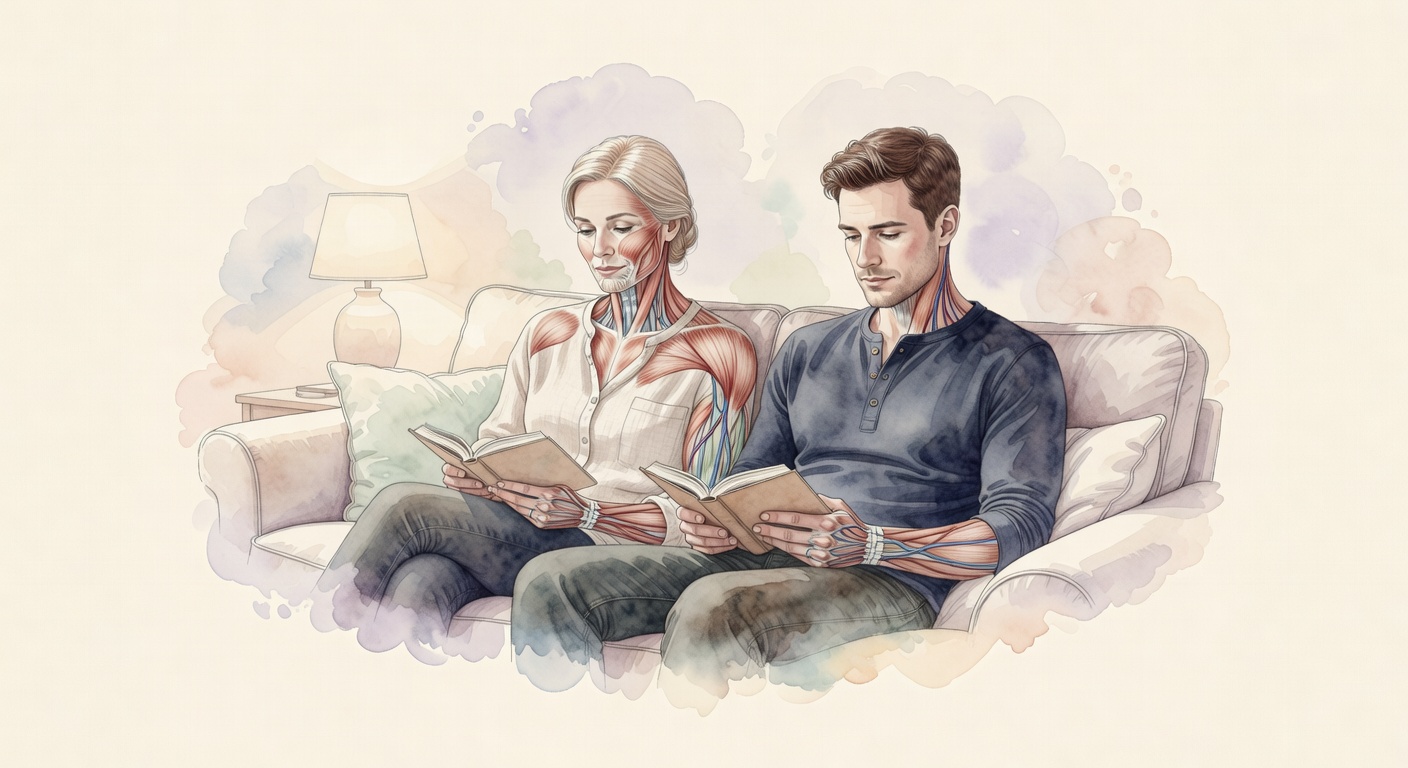
Until then, you hold the possibility quietly. It is enough that you know.
A Different Question
The question I want to leave you with is the question I started with — the question that, if you carry it into every session for the next twenty years of your clinical life, will quietly reshape the field.
Most of what you have been taught about dyspareunia was taught inside a frame that asked: how do we get this patient to be able to have sex again? The frame is so default that it usually goes unstated. The frame is the water the field swims in. The frame is also, in part, the problem.

Inside that frame, the patient's body is an obstacle to a goal. The clinician is a technician of removal. The patient is a project. The relationship is a context. Progress is measured in encounters successfully completed. The patient knows the frame. She has spent years inside it. Her partner knows the frame. Her last three providers operated inside it. Her own internal monologue, for a long time, has been a small voice asking am I there yet, am I there yet, am I there yet.
You are now in a position to ask a different question, of yourself, of your patient, of your field. The question is this:
> What if the goal is not to force the body into sex, but to help the body rediscover safety, choice, and connection?
Hold this question. Let it sit for a minute longer than feels comfortable.

What changes when the question changes
If safety, choice, and connection are the goals — and sex is one of many things that can grow inside them when they are present — then everything in the clinical encounter reorganizes.
The intake re-organizes. You stop asking how often do you have intercourse in the first ten minutes, because the answer to that question, at that moment, encodes the patient inside the failure script before she has been able to introduce herself. You start asking what kind of contact has felt good to you recently, in any context, anywhere in your life, with anyone — and you let her answer with the cat on her chest, or her best friend's hug, or the bath at the end of a long day. The intake itself becomes therapeutic, because it widens the field of relevant data.
The treatment plan re-organizes. You stop building protocols toward an endpoint of penetrative intercourse and start building toward an endpoint of the patient being a confident author of her own sexual life, whatever shape that life takes. Some patients land back in penetrative intercourse with their partner. Some land in deeply satisfying non-penetrative sexual lives. Some, after the work, leave a relationship that the work made it clear could not hold them. Each of these is a clinical success. The frame that calls only one of them a success is the frame that has been failing patients for forty years.
The supervision re-organizes. You stop asking your trainees is the patient back to baseline — because there was no baseline; the baseline was the conditions that produced the pain — and start asking is the patient widening her window? Is she becoming more able to make choices in real time? Is the partnership healing or is it merely persisting? The trainees, who have been waiting for permission to ask these questions, become better clinicians overnight.
The work this question does on you
A frame is not just a set of words. It is the angle from which you see the patient. The angle at which you see her shapes what she sees of herself.
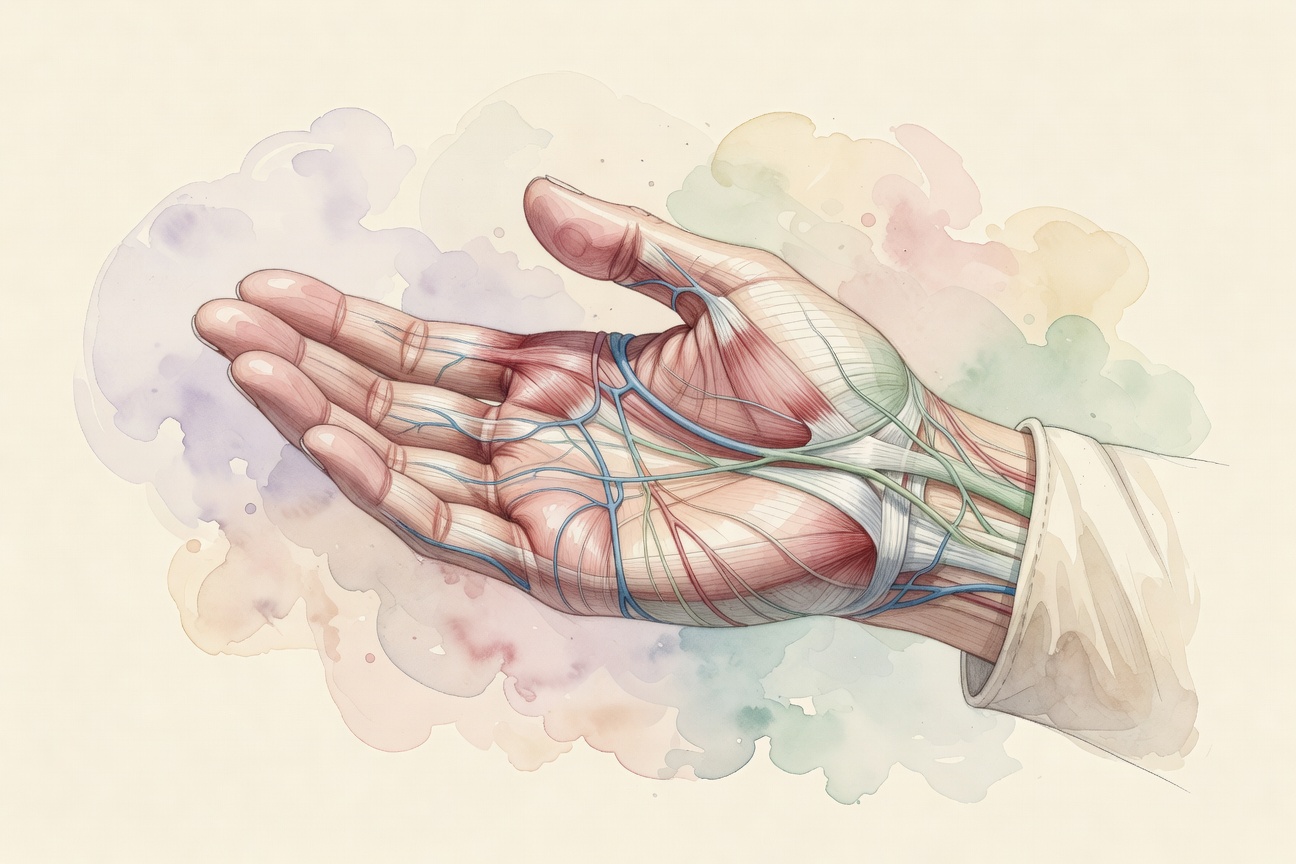
If you walk into the session believing the goal is to restore intercourse, the patient will feel that, no matter how kind your words are. She will feel that her recovery is being measured against a yardstick she has been measured against by everyone in her life and that has, every time, found her wanting. The most therapeutic words in the world, said from inside that frame, will be heard inside that frame.
If you walk into the session believing the goal is to help her rediscover safety, choice, and connection, she will feel that too. She will feel that for the first time in years a clinician is not measuring her toward an endpoint and is instead curious about her interior. The first thing the frame change does is to make her safer. The second thing it does is to make her capable of the work the frame asked of her in the first place. The frame change is therapeutic before any technique is deployed.
You can carry this frame in your shoulders, in your face, in the speed of your speech, in the silences you tolerate. It is more important than any specific intervention. Your patient will read it on you the moment she sits down.
Where Maya is
Maya — the composite patient we have walked through this course with — does not have a clean ending, because real patients do not have clean endings. By the time you have known her for a year and a half, she has done most of what we have walked through together. The pelvic PT work is mostly complete. The couples container is open and gently active. Jordan has his own therapist now. The failure-script has been named, externalized, and largely shelved. Her pleasure inventory runs to two pages.

She has had penetrative intercourse twice in the last six months without pain, and one of those times she did not have to do the doorway pause first; her body did the pause on its own. She is not in a hurry to do it again. She is not anxious about not being in a hurry. The not-being-in-a-hurry is, in her words, the part of her recovery that she would never have predicted.
She has also discovered that her pleasure inventory contains things she did not know about herself. That she likes her own back being scratched in a particular way. That she likes being read to in bed, fully clothed, by a partner who is not trying to get anywhere. That she likes morning more than night now. None of this was on a checklist of dyspareunia outcomes. It is the substance of her recovered erotic life. The substance was unrecoverable through the frame that had to be replaced for it to be visible.
What you carry forward
If you remember nothing else from this course, remember three things.
One. Pain is a prediction, not a punishment. It is the nervous system protecting your patient with the resources it has, including resources it acquired before she was old enough to consent to them. The protection deserves respect, not argument.
Two. Your job is to make the body's prediction obsolete by changing what the body has to predict against. You do this through safety, regulation, slowness, narrative reconstruction, and the patient relational holding of someone who is no longer in a hurry. You do not do it by pushing through.

Three. The frame you bring into the room is more therapeutic than any technique inside it. Carry the question. Let it shape the angle. The angle will shape the patient. The patient will shape her own life from there.
A closing reflection
Take a breath. The work you do with patients like Maya is some of the most consequential work in the clinical field, and almost none of it will appear in a chart note that another provider will read. Most of what you do, in this work, is invisible to medicine. Most of what you do is, also, the actual thing that helped.
Honor that. You are not in the business of restoring a function. You are in the business of helping a person come home to her own body. That is older work than medicine. It is older work than therapy. It is the oldest work there is, and you have agreed to do it.
One last time, then:

What if the goal is not to force the body into sex, but to help the body rediscover safety, choice, and connection?
Carry the question. The patients are waiting.
Colophon
Written and illustrated end-to-end through the Scriptorium pipeline.
Visual style: Atlas of Tenderness — soft hand-painted watercolor anatomical illustration in the tradition of vintage medical-atlas plates re-imagined with humanity and warmth. Rendered with xAI grok-imagine.
Text woven by Claude Opus 4.7. 48 chapter beats. 8 chapters. No text painted on illustrations — everything you read is in the prose.
Educational use only. This document is a clinician-facing continuing-education tutorial. It is not a treatment protocol and is not a substitute for individual supervision, training, or peer consultation. Patient vignettes are composite and anonymized.